

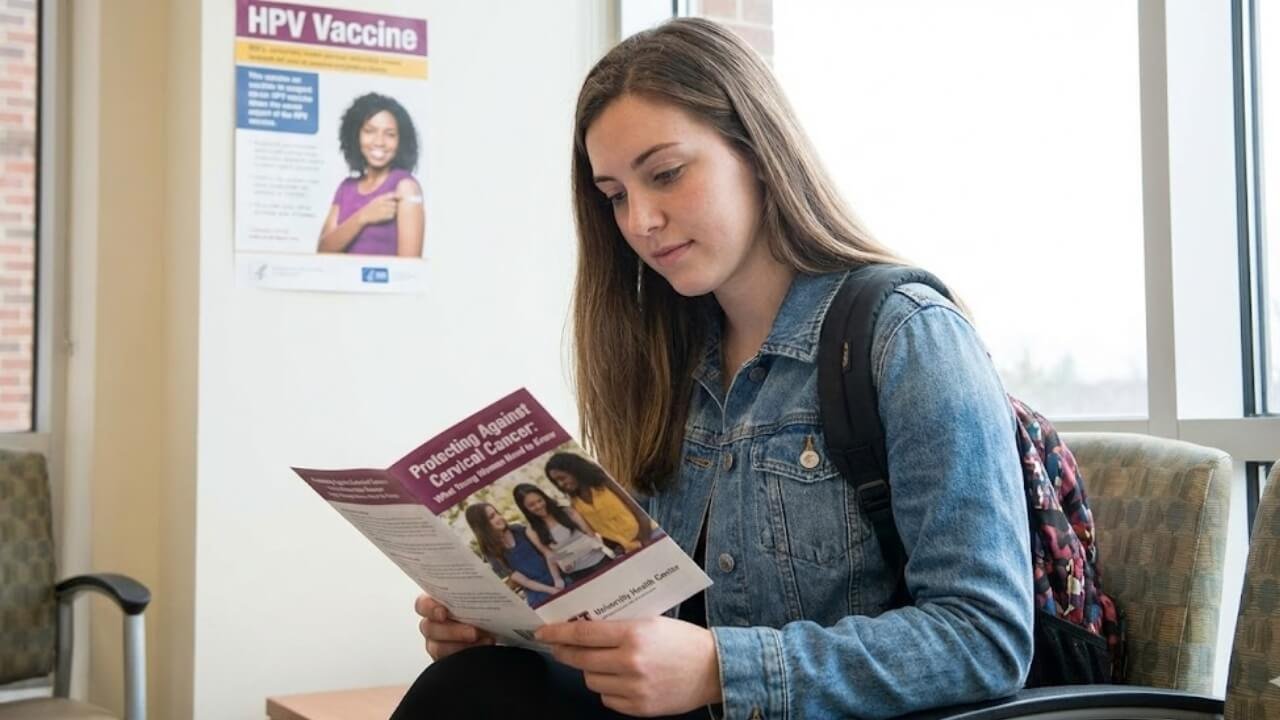
Knowledge is power. Understanding HPV and cervical cancer can save your life.
Why This Matters
Cervical cancer is the leading cause of cancer death among Indian women, yet it’s one of the most preventable cancers.
The facts:
- 99% of cervical cancers are caused by HPV (Human Papillomavirus)
- Most sexually active people will get HPV at some point
- HPV vaccination can prevent most cervical cancers
- Regular screening catches pre-cancerous changes early
- Early detection means nearly 100% cure rate
Taking action now protects your future.
Understanding HPV
What is HPV?
HPV (Human Papillomavirus) is a very common virus that spreads through skin-to-skin contact during sexual activity.
Key facts:
- Over 100 types of HPV exist
- Most HPV infections cause no symptoms
- Your body usually clears HPV on its own within 2 years
- Only certain “high-risk” types cause cancer
- HPV types 16 and 18 cause 70% of cervical cancers
How HPV Spreads
- Sexual contact (vaginal, anal, or oral)
- Skin-to-skin contact in the genital area
- You can have HPV without knowing it
- You can pass it to partners without symptoms
Important: Condoms reduce but don’t eliminate HPV risk because HPV affects areas condoms don’t cover.
HPV and Cancer
When high-risk HPV persists (doesn’t clear on its own), it can cause cell changes in the cervix over many years. These changes can eventually become cancer if not detected and treated.
Timeline: It typically takes 10-20 years from HPV infection to cervical cancer, giving plenty of time for detection through screening.
HPV Vaccination: Your Best Protection
Why Get Vaccinated?
The HPV vaccine is incredibly effective:
- Prevents 90% of HPV-related cancers
- Most effective when given before first sexual activity
- Safe, with decades of research supporting it
- One-time protection (no need for boosters)
The vaccine protects against:
- Cervical cancer
- Other cancers (vaginal, vulvar, anal, throat)
- Genital warts
Who Should Get Vaccinated?
Best age: 9-16 years (before sexual activity begins)
Catch-up vaccination: Up to age 26
- Still beneficial even if sexually active
- You likely haven’t been exposed to all HPV types the vaccine covers
Over 26: Talk to your doctor about whether vaccination makes sense for you.
The Vaccination Schedule
Age 9-14: Two doses, 6-12 months apart
Age 15-26: Three doses (0, 1-2 months, 6 months)
Where to Get Vaccinated
- Government health centers
- Private hospitals and clinics
- Some schools offer vaccination programs
- Gynecology clinics
Is It Safe?
Yes. The HPV vaccine has been used worldwide for over 15 years with an excellent safety record.
Common side effects (mild and temporary):
- Arm soreness at injection site
- Mild fever
- Headache
- Fatigue
Serious side effects are extremely rare.
Myths About HPV Vaccine
Myth: “The vaccine encourages sexual activity” Truth: Studies show no change in sexual behavior after vaccination.
Myth: “It’s not safe” Truth: Extensively tested and monitored. Over 135 million doses given in the US alone.
Myth: “I don’t need it if I’m not sexually active yet” Truth: The vaccine works best BEFORE exposure to HPV.
Myth: “It causes infertility” Truth: No evidence whatsoever. This myth has been thoroughly debunked.
Cervical Cancer Screening (Pap Smear)
Vaccination doesn’t replace screening – you need both.
When to Start Screening
Age 21 – regardless of sexual activity status
How Often?
Ages 21-29: Pap smear every 3 years
Ages 30-65: Pap smear + HPV test every 5 years (or Pap smear alone every 3 years)
Never skip your scheduled screenings. They save lives by catching problems early.
What is a Pap Smear?
A quick test where your doctor collects cells from your cervix to check for abnormal changes.
The procedure:
- You lie on an exam table with feet in supports
- Doctor inserts a speculum (metal or plastic instrument) to see your cervix
- A small brush or spatula gently collects cells
- Cells are sent to lab for analysis
- Takes less than 5 minutes
Is it painful? Usually not painful, but may feel uncomfortable or cause pressure. Relaxing helps.
Understanding Your Results
Normal: No abnormal cells detected. Continue regular screening.
Abnormal: Doesn’t mean cancer! Often means:
- Inflammation
- Infection
- Pre-cancerous changes (easily treatable)
If results are abnormal:
- Don’t panic
- Follow up as your doctor recommends
- You may need repeat test or colposcopy (closer look at cervix)
Reducing Your Risk
Beyond Vaccination and Screening
Healthy habits that help:
- Don’t smoke – Smoking doubles cervical cancer risk
- Practice safer sex – Use condoms consistently (reduces but doesn’t eliminate HPV risk)
- Limit sexual partners – Fewer partners = less HPV exposure
- Boost your immune system:
- Eat nutritious diet with lots of fruits and vegetables
- Exercise regularly
- Get adequate sleep
- Manage stress
- Treat vaginal infections promptly – Chronic inflammation may increase risk
Warning Signs (See a Doctor)
Between screenings, see your doctor if you experience:
- Unusual vaginal bleeding
- Between periods
- After intercourse
- After menopause
- Abnormal vaginal discharge (watery, bloody, heavy, foul-smelling)
- Pelvic pain
- Pain during intercourse
These symptoms don’t necessarily mean cancer but should always be evaluated.
Your Cervical Health Action Plan
If You’re Under 21:
- Get HPV vaccination (if not already done)
- Learn about cervical health
- Practice healthy habits
- Screening starts at 21
If You’re 21-26:
- Get HPV vaccination (if not already done)
- Start regular Pap smears
- Don’t skip appointments
- Practice risk reduction
If You’re Over 26:
- Continue regular screening (most important!)
- Discuss HPV vaccination with your doctor
- Maintain healthy lifestyle
- Never skip screenings
Common Questions
Q: Can I get cervical cancer if I’m a virgin? A: Extremely unlikely, as HPV spreads through sexual contact. But you should still get vaccinated before sexual activity begins.
Q: I’m in a monogamous relationship. Do I still need screening? A: Yes! HPV can lie dormant for years. You or your partner could have been exposed before your current relationship.
Q: My Pap smear is normal. Do I still need the HPV vaccine? A: Talk to your doctor. If you’re under 26 and haven’t been vaccinated, it may still benefit you.
Q: Does the HPV vaccine protect against all cervical cancer? A: It protects against types causing 90% of cervical cancers, but not all. Screening is still essential.
Take Action Today
Three simple steps:
- Get vaccinated (if eligible)
- Schedule your Pap smear (if 21 or older)
- Share this information with friends and family
Remember
Cervical cancer is preventable, and early detection means it’s treatable. Don’t let embarrassment or fear stop you from protecting yourself.
Your health is worth it. You are worth it.
For more information or to find a screening center: Contact your local health department or gynecology clinic.