

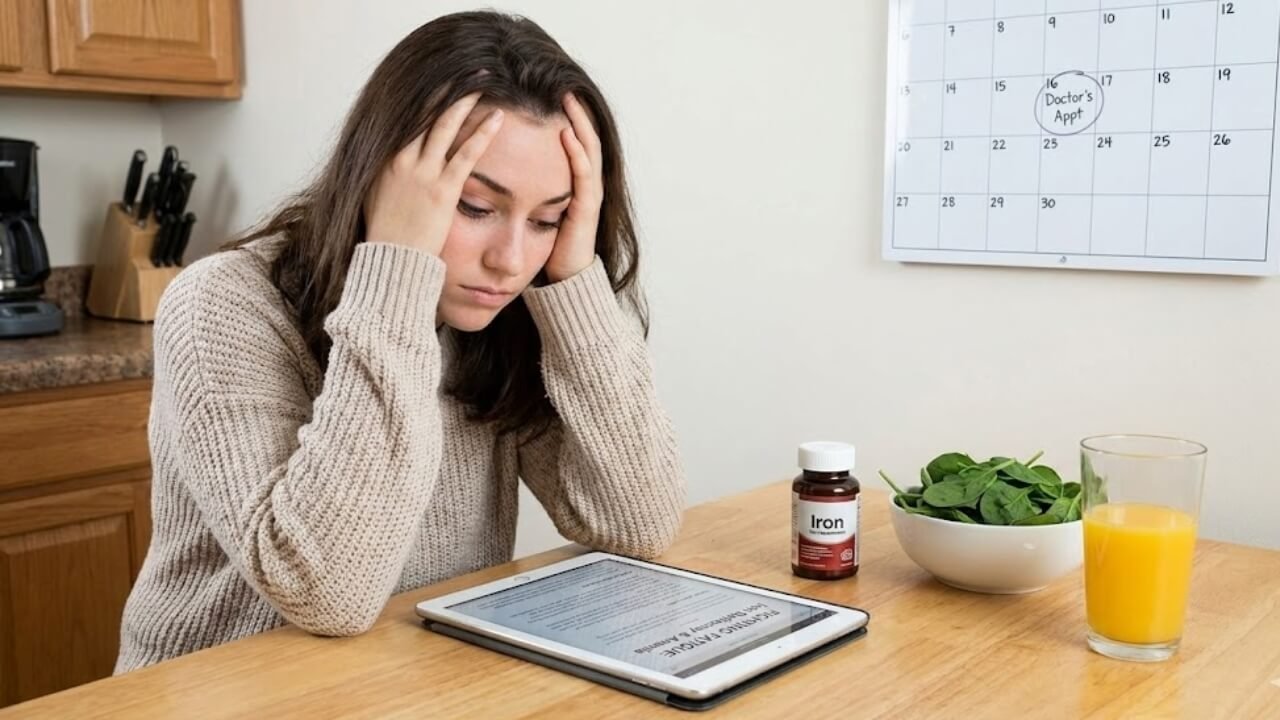
Iron deficiency is the most common nutritional deficiency in women. Understanding and treating it can transform your energy and health.
What is Iron Deficiency Anemia?
Anemia means you don’t have enough healthy red blood cells to carry adequate oxygen to your body’s tissues.
Iron deficiency anemia occurs when your body doesn’t have enough iron to make hemoglobin – the protein in red blood cells that carries oxygen.
Result: Your organs and tissues don’t get enough oxygen, leaving you exhausted and unwell.
Why Women Are at Higher Risk
Monthly Menstruation
You lose iron every month through menstrual bleeding.
Heavy periods = higher risk:
- Soaking through pad/tampon every 1-2 hours
- Periods lasting more than 7 days
- Passing large clots
Each period, you lose about 30-40ml of blood (up to 60mg of iron). Heavy periods can double or triple this loss.
Higher Iron Needs
Women of reproductive age need MORE iron than men:
- Women: 18mg daily
- Men: 8mg daily
This need more than doubles the male requirement.
Other Risk Factors
- Vegetarian/vegan diet (plant iron is less absorbable)
- Pregnancy (increased iron needs)
- Frequent blood donation
- Digestive disorders (celiac, Crohn’s)
- Internal bleeding (ulcers)
Symptoms of Iron Deficiency
Early Signs (Mild Deficiency)
- Unusual fatigue and tiredness
- Weakness
- Decreased focus and concentration
- Mild headaches
- Cold hands and feet
Many women dismiss these as “just being tired” or “stress.”
Progressive Signs (Moderate Deficiency)
- Pale skin, nail beds, and inside lower eyelids
- Brittle nails
- Shortness of breath with normal activities
- Dizziness or lightheadedness
- Rapid or irregular heartbeat
- Sore or swollen tongue
- Unusual cravings (ice, starch, dirt – called pica)
Severe Deficiency Signs
- Extreme fatigue interfering with daily life
- Chest pain
- Difficulty breathing with minimal exertion
- Severe headaches
- Restless leg syndrome
- Frequent infections (weakened immune system)
Don’t wait for severe symptoms. Early treatment is easier and prevents complications.
Risks in Pregnancy
Iron deficiency in early pregnancy doubles the risk of preterm birth.
Additional pregnancy risks:
- Low birth weight baby
- Postpartum depression
- Increased infection risk
- Delayed child development
If planning pregnancy or pregnant, iron status is critical.
Getting Diagnosed
Blood Tests
Complete Blood Count (CBC):
- Hemoglobin level (low = anemia)
- Hematocrit (percentage of blood made up of red blood cells)
Iron Studies:
- Serum ferritin (stored iron – best indicator)
- Serum iron
- Total iron-binding capacity (TIBC)
- Transferrin saturation
Normal ranges:
- Hemoglobin: 12-16 g/dL for women
- Ferritin: 15-200 ng/mL (optimal: 50-100 ng/mL)
Ask for a copy of your results so you know your numbers.
Iron-Rich Foods: Your First Defense
Heme Iron (Animal Sources – Better Absorbed)
Body absorbs 15-35% of heme iron.
Best sources:
- Red meat (beef, lamb) – highest iron content
- 3 oz beef: 2-3mg iron
- Poultry (chicken, turkey)
- Dark meat has more iron than white
- 3 oz chicken: 1-2mg iron
- Fish (especially sardines, tuna, salmon)
- 3 oz sardines: 2-3mg iron
- Liver (chicken or beef)
- Extremely high in iron but limit to once weekly
Non-Heme Iron (Plant Sources – Less Absorbed)
Body absorbs only 2-20% of non-heme iron.
Good sources:
- Lentils and beans (1 cup cooked: 3-7mg)
- Especially kidney beans, black beans, chickpeas
- Spinach and leafy greens (1 cup cooked: 3-6mg)
- Spinach, kale, Swiss chard
- Tofu (1/2 cup: 3-4mg)
- Fortified cereals (check label – some have 100% daily value!)
- Pumpkin seeds (1/4 cup: 5mg)
- Quinoa (1 cup cooked: 3mg)
- Dark chocolate (1 oz: 3mg)
- Dried fruits (apricots, raisins, prunes)
Maximizing Iron Absorption
Pair Iron with Vitamin C
Vitamin C can increase iron absorption by up to 3-4 times!
Vitamin C-rich foods:
- Citrus fruits (oranges, lemons, grapefruit)
- Strawberries and other berries
- Tomatoes and tomato juice
- Bell peppers (especially red)
- Broccoli and Brussels sprouts
- Kiwi and papaya
Smart pairings:
- Lentil curry with tomatoes
- Spinach salad with orange slices
- Iron-fortified cereal with strawberries
- Chickpea dish with lemon juice
- Iron supplement with orange juice
Avoid Iron Blockers Around Meals
These significantly reduce iron absorption:
Tea and Coffee:
- Contain tannins that bind to iron
- Wait 1 hour before meals, 2 hours after meals
- If you must have tea/coffee with food, at least wait 30 minutes
Calcium:
- Dairy products (milk, cheese, yogurt)
- Calcium supplements
- Don’t take calcium and iron supplements together
- Space apart by 2-3 hours
Phytates:
- Found in whole grains, legumes, nuts
- Soaking, sprouting, or fermenting reduces phytates
- Cooking also helps
Antacids:
- Reduce stomach acid needed for iron absorption
- Space apart from iron-rich meals
Iron Supplements
When You Need Supplements
Your doctor may prescribe if:
- Blood tests show deficiency
- Dietary changes aren’t enough
- You have heavy periods
- You’re pregnant or planning pregnancy
- You can’t eat enough iron-rich foods
Don’t self-diagnose. Too much iron can be harmful. Get tested first.
Taking Iron Supplements Effectively
Timing:
- Take on empty stomach (1 hour before or 2 hours after meals) for best absorption
- If stomach upset occurs, take with small amount of food
Enhance absorption:
- Take with vitamin C (orange juice, vitamin C tablet)
- Take in divided doses (body absorbs more from smaller amounts)
Avoid taking with:
- Tea, coffee
- Calcium supplements or antacids
- Dairy products
Common side effects:
- Constipation (increase fiber and water)
- Nausea (try taking with food or at bedtime)
- Dark stools (harmless)
- Stomach upset
Types of iron:
- Ferrous sulfate (most common)
- Ferrous gluconate (gentler on stomach)
- Ferrous fumarate
- Your doctor will recommend the best type for you
How Long Until Improvement?
You should feel better within 1-2 weeks, but iron stores take 2-3 months to rebuild.
Continue supplementation as prescribed, usually 3-6 months, then retest.
Sample High-Iron Day
Breakfast:
- Iron-fortified cereal with strawberries
- Glass of orange juice
- Wait 1 hour, then have tea if desired
Mid-Morning Snack:
- Handful of dried apricots
Lunch:
- Spinach and lentil curry with tomatoes
- Brown rice
- Side of bell peppers
- Wait 2 hours for tea/coffee
Afternoon Snack:
- Dark chocolate square
- Orange slices
Dinner:
- Grilled chicken (dark meat)
- Broccoli with lemon
- Quinoa
- Side salad with pumpkin seeds
Evening:
- If needed, take iron supplement with vitamin C tablet
Daily total: Approximately 25-30mg iron (above the 18mg daily requirement)
Preventing Iron Deficiency
For Women with Heavy Periods
Talk to your doctor about:
- Hormonal treatment to lighten periods
- Investigating cause of heavy bleeding
- Preventive iron supplementation
For Vegetarians and Vegans
You need 1.8 times more iron (about 32mg daily) because plant iron is less absorbable.
Strategies:
- Eat iron-rich plant foods at every meal
- Always pair with vitamin C
- Consider fortified foods
- May need supplements (get tested)
- Cook in cast-iron cookware (adds iron to food)
For All Women
- Eat iron-rich foods regularly
- Pair with vitamin C
- Time tea/coffee away from meals
- Get tested annually (or more often if at risk)
- Address heavy periods (don’t just accept them as “normal”)
- Take prenatal vitamins when planning pregnancy
Monitoring Your Progress
Track Your Symptoms
Keep a log:
- Energy levels (rate 1-10 daily)
- Other symptoms
- Dietary intake
- Supplement compliance
You should notice improvement within weeks with proper treatment.
Follow-Up Testing
Recheck blood work:
- After 1-2 months of treatment
- After completing supplement course
- Annually for ongoing monitoring
Don’t stop supplements without doctor approval, even if you feel better. Iron stores need time to rebuild.
When to See a Doctor
See your doctor if you:
- Experience symptoms of iron deficiency
- Have heavy menstrual bleeding
- Are pregnant or planning pregnancy
- Are vegetarian/vegan
- Have been diagnosed and treatment isn’t helping
- Experience severe side effects from supplements
Request blood tests – don’t assume you’re fine without testing.
Prevention Strategies
For Life
- Eat iron-rich foods daily
- Include vitamin C at meals
- Space out tea/coffee (1 hour before, 2 hours after meals)
- Address heavy periods (don’t suffer in silence)
- Get annual blood work
- Take supplements as prescribed
- Know your numbers (what’s YOUR ferritin level?)
Remember
Iron deficiency is incredibly common but completely treatable. You don’t have to accept exhaustion as “normal.”
With proper treatment, most women feel dramatically better within weeks.
Your energy, focus, and overall health can improve significantly. Take action today.
Don’t guess – get tested. Don’t ignore symptoms – treat them. Your health is worth it.