

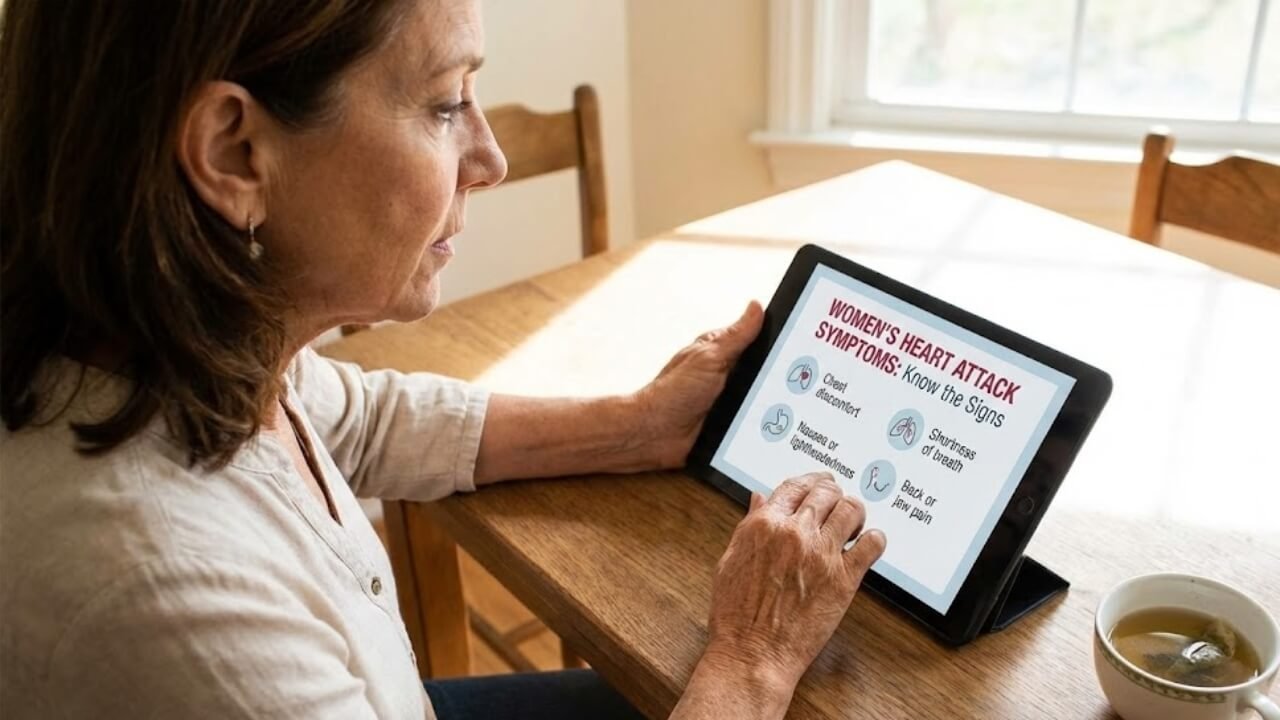
Know the Signs That Could Save Your Life
Heart attacks kill women—yet women are more likely than men to delay seeking help because they don’t recognize the symptoms. Women’s heart attack symptoms can be subtle, different from the “classic” chest pain portrayed in movies, and easily dismissed as indigestion, anxiety, or stress. Understanding women-specific symptoms and seeking immediate help can save your life.
Why Women’s Symptoms Differ
Different Blockage Patterns
Men:
- Typically have blockages in large coronary arteries
- Often sudden, complete blockage
Women:
- More likely to have blockages in smaller blood vessels (microvasc ular disease)
- Plaque erosion more common than rupture
- May have slower-progressing blockages
- Different physiology affects symptom presentation
Hormonal Factors
Estrogen:
- Affects how pain is perceived and manifested
- After menopause, symptom patterns may shift
Diagnostic Challenges
Medical Community:
- Heart disease historically studied primarily in men
- Women’s “atypical” symptoms (which are actually typical for women) often dismissed or misdiagnosed
- Women more likely to have their symptoms attributed to anxiety, stress, or non-cardiac causes
Women Themselves:
- Often don’t recognize symptoms
- More likely to delay seeking help
- Worry about “making a fuss” or being embarrassed if not a heart attack
- Prioritize others over self
The Result: Women wait an average of 30 minutes longer than men to seek emergency care after heart attack symptoms begin. This delay can be deadly.
Classic Heart Attack Symptoms (Occur in Both Men and Women)
Chest Discomfort
Description:
- Pressure, squeezing, fullness, tightness, or pain in center of chest
- Often described as feeling like “elephant sitting on chest” or “tight band around chest”
- May come and go or be constant
- Usually lasts more than a few minutes
Important:
- May not be severe pain—can be moderate discomfort
- Women more likely to describe as “pressure” or “tightness” rather than “pain”
- Can occur at rest or with exertion
Not Always Present in Women: Up to 40-50% of women having heart attack don’t experience prominent chest pain.
Arm, Shoulder, Neck, Jaw, or Back Pain
Description:
- Discomfort radiating from chest
- Most commonly left arm, but can be right arm or both
- Jaw, neck, or back pain (between shoulder blades)
- May occur without chest pain
Why It Happens: Pain signals from heart can be perceived in these areas due to shared nerve pathways.
Women-Specific Symptoms (More Common in Women, Often Without Chest Pain)
Unusual or Overwhelming Fatigue
Most Common Warning Sign in Women:
- Extreme tiredness that comes on suddenly or worsens over days/weeks
- Fatigue disproportionate to activity level
- Exhaustion from simple tasks (climbing stairs, walking short distance, making bed)
- Inability to do usual activities
- Feeling like you have the flu
Why Women Dismiss It:
- Attributed to menopause, aging, stress, poor sleep, depression
- Seems too vague to be serious
- “I’m just tired” seems normal
The Reality: Unusual, overwhelming fatigue is a major warning sign—especially if sudden or progressively worsening.
Shortness of Breath
Description:
- Difficulty breathing or catching breath
- Breathlessness with minimal exertion or at rest
- Feeling winded after activities that didn’t previously cause breathlessness
- Can occur with or without chest discomfort
Why It Happens: Heart not pumping effectively; lungs get congested with fluid.
Women Often Dismiss: Attributed to being “out of shape,” aging, weight gain.
Nausea, Indigestion, or Vomiting
Description:
- Feeling sick to stomach
- Indigestion, heartburn, or upset stomach
- Vomiting
- Abdominal discomfort or pain
Why Women Dismiss It:
- Seems like food poisoning, stomach bug, or indigestion
- Take antacid and wait to see if it passes
The Reality: GI symptoms are common in women’s heart attacks—especially if accompanied by other symptoms.
Cold Sweat or Clammy Skin
Description:
- Breaking out in cold sweat for no apparent reason
- Clammy, cool, pale skin
- Different from hot flash (which causes warmth and flushing)
Why It Happens: Body’s stress response to heart not getting enough oxygen.
Lightheadedness or Dizziness
Description:
- Feeling faint, dizzy, or lightheaded
- Room spinning (vertigo)
- Unsteadiness
Why It Happens: Reduced blood flow to brain due to heart not pumping effectively.
Sleep Disturbances
Warning Sign (Days to Weeks Before Heart Attack):
- Unusual difficulty sleeping
- Waking frequently
- Feeling unrested despite adequate sleep
Why Women Dismiss: Attributed to menopause, stress, or aging.
Important Differences Between Men and Women
Men:
- Often sudden, severe chest pain
- Symptoms more dramatic and “obvious”
- Classic presentation in most cases
Women:
- Symptoms may be subtle and gradual
- May have symptoms days or weeks before heart attack
- Chest pain may be absent or less prominent
- More likely to have vague symptoms (fatigue, nausea, shortness of breath)
- Symptoms easily dismissed as non-cardiac
Why This Matters: Women and healthcare providers must have higher suspicion for heart attack even without “classic” chest pain.
When to Call 911 Immediately
Don’t Wait or Wonder
Call 911 If You Experience:
- Any chest discomfort (pressure, squeezing, pain, tightness)—especially if lasts more than a few minutes or goes away and comes back
- Pain or discomfort in arms, back, neck, jaw, or stomach
- Shortness of breath (with or without chest discomfort)
- Unusual or overwhelming fatigue
- Cold sweat, nausea, lightheadedness
- Any combination of the above symptoms
Time Is Muscle
Every Minute Counts:
- Heart muscle begins dying without oxygen
- Faster treatment = more heart muscle saved = better outcomes
- Treatment is most effective within first hour of symptom onset (“golden hour”)
Don’t Delay:
- Don’t wait to see if symptoms pass
- Don’t drive yourself to hospital
- Don’t have someone else drive you
- Call 911—paramedics can begin treatment immediately and alert hospital
Don’t Dismiss Your Symptoms
Women Are More Likely To:
- Wait and see if symptoms improve
- Worry about being embarrassed if “it’s nothing”
- Not want to “bother” anyone or “make a fuss”
- Attribute symptoms to something else (anxiety, indigestion, stress)
- Prioritize others’ needs over seeking help
The Reality:
- If it’s not a heart attack, you’ll be relieved
- If it is a heart attack, you could save your life
- Healthcare providers would rather evaluate you and find nothing than have you delay and suffer permanent damage or death
- Your life matters—don’t minimize symptoms
What to Do While Waiting for Help
Call 911 First: Then take these steps while waiting:
Chew Aspirin:
- Take 1 regular aspirin (325mg) OR 4 baby aspirin (81mg each)
- Chew it (faster absorption)
- Only if no aspirin allergy
- Reduces blood clotting, may limit heart damage
Stay Calm:
- Sit or lie down
- Try to remain calm (easier said than done, but anxiety increases heart workload)
- Deep, slow breaths
Do NOT:
- Drive yourself to hospital
- Wait to see if symptoms pass
- Take unnecessary medications or home remedies
- Eat or drink anything
Unlock Door: So paramedics can enter quickly.
If Someone With You: Have them gather your medications (bring list or bottles to hospital).
Atypical Presentations More Common in Women
“Silent” Heart Attacks
What They Are: Heart attacks with minimal or no symptoms—or symptoms so vague they’re not recognized as heart attack.
More Common in:
- Women
- People with diabetes (nerve damage affects pain perception)
- Elderly
Why Concerning: Heart damage occurs without treatment. First sign may be heart failure or abnormal EKG finding.
Take-Home: Don’t assume you’d know if having heart attack. Women’s symptoms can be very subtle.
Broken Heart Syndrome (Takotsubo Cardiomyopathy)
What It Is: Temporary weakening of heart muscle triggered by severe emotional or physical stress (death of loved one, major surgery, serious illness).
Symptoms: Identical to heart attack—chest pain, shortness of breath.
More Common in Women: Especially postmenopausal women.
Diagnosis: Requires testing to distinguish from true heart attack.
Prognosis: Usually recovers fully, but can be life-threatening acutely. Seek immediate care for symptoms.
After a Heart Attack: What to Expect
Emergency Treatment:
- EKG to diagnose
- Blood tests (troponin—marker of heart damage)
- Medications to dissolve clot and prevent more clotting
- Possible cardiac catheterization (angiogram)—dye injected, x-ray of coronary arteries
- Possible stent placement or bypass surgery if severe blockages
Hospital Stay:
- Monitoring in cardiac care unit
- Medications (antiplatelet drugs, beta blockers, ACE inhibitors, statins)
- Cardiac rehabilitation referral
Recovery:
- Gradual return to activities over weeks to months
- Cardiac rehabilitation program (exercise, education, support)—strongly recommended
- Medications long-term
- Lifestyle modifications essential
- Emotional recovery (depression and anxiety common—seek help if needed)
Prognosis: Depends on extent of damage, how quickly treated, overall health. Many women live long, healthy lives after heart attack with proper treatment and lifestyle changes.
Prevention Is Key (See Heart Health Page)
Best Strategy: Prevent heart attack from occurring in first place through:
- Heart-healthy diet
- Regular exercise
- Healthy weight
- Don’t smoke
- Manage blood pressure, cholesterol, diabetes
- Know your risk
The Bottom Line
Women’s Heart Attack Symptoms Differ:
- Often more subtle than men’s
- May not include prominent chest pain
- Easily dismissed as something else
- Can develop gradually over days/weeks
Most Common Warning Signs in Women:
- Unusual, overwhelming fatigue
- Shortness of breath
- Nausea, indigestion
- Chest discomfort (but may be absent)
- Arm, neck, jaw, or back pain
- Cold sweat, dizziness
Trust Your Instincts: If something feels wrong, don’t ignore it. You know your body better than anyone.
Don’t Minimize Symptoms: Women are socialized to minimize their own needs and not “make a fuss.” Your life is worth any potential embarrassment.
Call 911 Immediately:
- Don’t wait and see
- Don’t drive yourself
- Time is muscle—every minute counts
Healthcare Providers Must Listen: Women’s symptoms are too often dismissed. Advocate for yourself. If provider doesn’t take you seriously, insist on cardiac workup.
Tell Other Women: Share this information with friends, family, daughters. Knowledge saves lives.
You Are Worth Saving: Your life matters. Your health matters. Don’t delay seeking help out of concern for others or embarrassment. Save your life—call 911 if symptoms occur.