

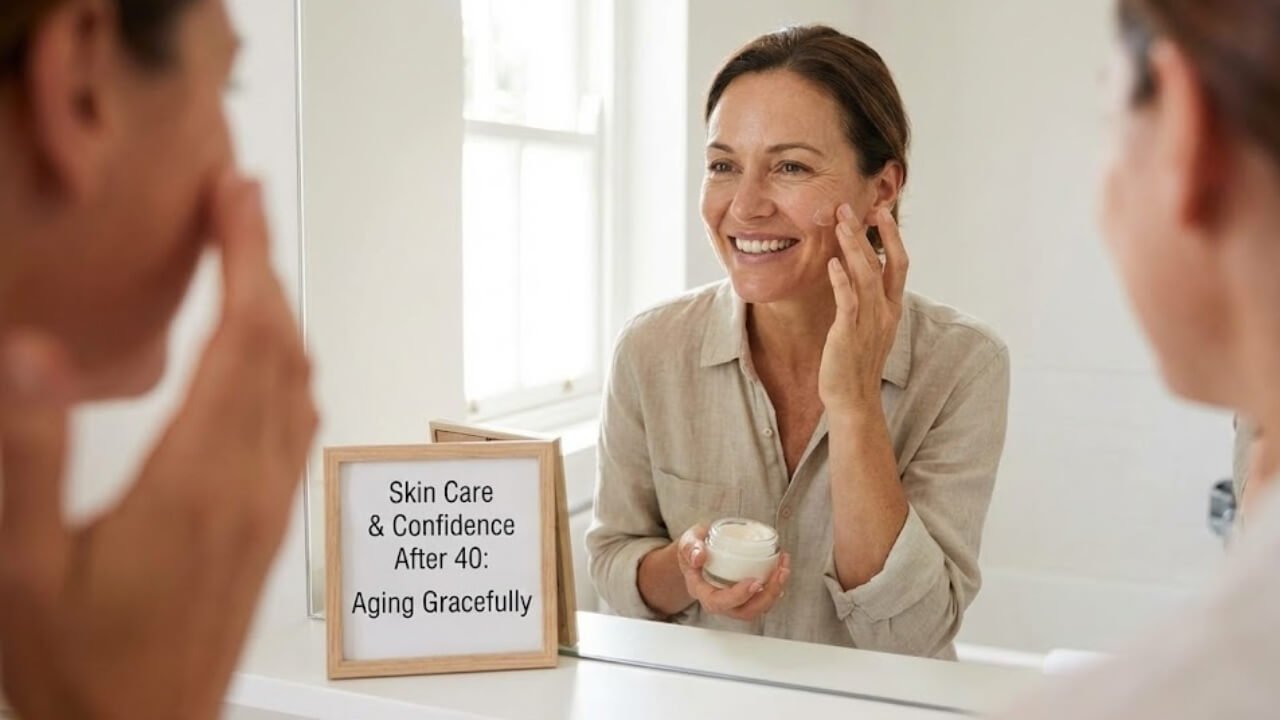
Your skin changes as you age, but with proper care and a positive mindset, you can feel confident and comfortable in your skin at any age.
How Skin Changes With Age
Understanding what’s happening helps you address changes effectively:
Thinner Skin: The epidermis (outer layer) thins, making skin more delicate and translucent. Veins may become more visible.
Less Elastic: Collagen and elastin production decreases, leading to sagging, wrinkles, and less “bounce back” when pressed.
Drier: Oil glands produce less sebum, causing dryness, flaking, and itching—especially after menopause when hormonal changes accelerate this.
More Fragile: Thinner skin bruises and tears more easily. Healing takes longer.
Age Spots: Years of sun exposure manifest as brown spots (lentigines), particularly on face, hands, and chest.
Wrinkles Deepen: Expression lines around eyes, mouth, and forehead become more pronounced. Gravity takes its toll.
These changes are universal and natural. How you care for your skin can influence the extent and speed of these changes.
Aging Skin Care Routine
1. Gentle Cleansing
Harsh soaps strip natural oils from already-dry skin. Use:
- Gentle, fragrance-free cleansers
- Lukewarm (not hot) water
- Pat dry, don’t rub
- Cleanse once or twice daily, not more
2. Moisturizing (Essential!)
This becomes crucial as natural oil production decreases:
- Apply immediately after washing while skin is damp
- Use thicker creams, not light lotions
- Look for ingredients like ceramides, hyaluronic acid, glycerin
- Don’t forget neck, chest, and hands
- Reapply throughout the day if needed
Consider a heavier night cream and lighter day cream.
3. Sun Protection (Still #1 Anti-Aging Strategy)
It’s never too late to start protecting your skin from sun damage:
- Wear SPF 30+ broad-spectrum sunscreen daily
- Apply to face, neck, chest, and hands
- Reapply every 2 hours when outdoors
- Even on cloudy days
- Even in winter
Sun protection prevents further damage, reduces skin cancer risk, and can allow some existing damage to repair. This single step matters more than any anti-aging product.
4. Retinoids (Prescription or Over-the-Counter)
The gold standard for anti-aging:
- Increases cell turnover
- Stimulates collagen production
- Reduces fine lines and wrinkles
- Improves texture and tone
- Available in prescription (tretinoin, Retin-A) or OTC (retinol) forms
Start slowly: Use pea-sized amount 2-3 nights weekly initially, building up as skin adjusts. Expect some redness and peeling at first. Always use sunscreen with retinoids.
5. Antioxidants (Vitamin C Serum)
Antioxidants protect skin from environmental damage:
- Apply vitamin C serum in morning under sunscreen
- Protects against free radical damage
- Brightens skin tone
- Supports collagen production
Sun Protection: Never Too Late
Even if you already have sun damage, protection remains crucial:
- Prevents further damage: Every additional sun exposure adds to cumulative damage
- Allows repair: Protected skin can partially reverse some damage
- Reduces cancer risk: Most skin cancers are preventable with sun protection
- Slows aging: UV exposure is the primary external cause of skin aging
Sun protection isn’t just about appearance—it’s about health.
Managing Age Spots
Prevention:
- Sun protection (prevents new ones and darkening of existing)
- Sunscreen daily
Treatment options if desired:
- Topical lightening creams (hydroquinone, kojic acid, vitamin C)
- Prescription tretinoin
- Chemical peels
- Laser treatments
- IPL (intense pulsed light)
Discuss with a dermatologist for safe, effective treatment. Many women choose to embrace age spots—they tell your life story.
Hair Changes and Care
Hair changes significantly after menopause:
Graying: Melanin production decreases. Hair turns gray or white.
Thinning: Especially at crown and temples. Hair grows more slowly and may not grow as long.
Texture Changes: May become coarser or finer, frizzier or straighter.
Care strategies:
- Use gentle, sulfate-free shampoos
- Condition regularly (hair becomes drier)
- Avoid excessive heat styling
- Consider biotin supplements (discuss with doctor)
- Protect hair from sun damage
- Be gentle with wet hair (most fragile)
Color or embrace gray? Entirely your choice. Both can look beautiful. Gray hair can be striking and requires less maintenance—many women love their silver. Others prefer to color. Do what makes you feel best.
Feeling Confident at Any Age
Beauty Doesn’t Expire at 40
Society’s beauty standards focus on youth, but true beauty encompasses confidence, authenticity, kindness, wisdom, and self-care at every age. You don’t need to look 25 to be beautiful at 60.
Confidence Comes from Self-Care, Not Perfection
Taking care of your skin, health, and appearance shows self-respect. But obsessing over every line and spot steals joy. Find the balance that feels right for you—care for your skin without letting it control your self-worth.
Aging Is a Privilege
The alternative to aging is not living. Every year, wrinkle, and gray hair represents experiences lived, challenges overcome, joy experienced, and wisdom gained. Many people don’t get the chance to age.
Inner Beauty Radiates Outward
No cream or procedure can replicate:
- A genuine smile
- Kindness and warmth
- Confidence and self-assurance
- Joy and laughter
- Curiosity and engagement with life
- Compassion and empathy
These qualities make you attractive at any age and improve with time.
Redefining Beauty Standards
Challenge narrow beauty ideals:
- Beauty exists at every age, size, and stage
- Wrinkles are evidence of laughter and expression
- Your body has carried you through life—respect it
- Diversity is beautiful
- Authenticity is attractive
Surround yourself with positive influences:
- Follow social media accounts showing diverse beauty
- Spend time with people who lift you up
- Avoid media that makes you feel inadequate
- Speak kindly to yourself
Self-Care Importance
Caring for yourself—skin, body, mind, spirit—shows self-love:
- Regular skin care routine
- Healthy eating
- Physical activity
- Quality sleep
- Managing stress
- Pursuing interests and passions
- Maintaining connections
- Dressing in ways that make you feel good
Self-care isn’t vanity—it’s self-respect. You deserve to feel comfortable and confident in your body.
Focus on Health, Not Just Appearance
Skin health matters more than perfect skin:
- Preventing skin cancer through sun protection
- Addressing concerning moles or changes
- Managing skin conditions (rosacea, eczema)
- Keeping skin comfortable (not dry or irritated)
Annual skin checks with a dermatologist become important for skin cancer screening. Know your skin and report changes to your doctor.
The Bottom Line
Aging skin is natural and normal. With proper care—sun protection, moisturizing, and gentle treatment—you can keep your skin healthy and comfortable.
But more importantly, aging gracefully means accepting changes while caring for yourself, redefining beauty on your terms, and embracing the wisdom and confidence that come with age.
You are more than your appearance. Your value doesn’t diminish with wrinkles. Your beauty evolves—it doesn’t disappear.
Take care of your skin because you deserve comfort and health, not because you need to look younger. Feel confident because you’re living fully, growing wiser, and caring for yourself with compassion.
Aging gracefully means being authentically, confidently, unapologetically yourself—at every age.