

Understanding Age-Related Changes
If you’re over 40 and thinking about having a baby, understanding how age affects fertility is essential for making informed decisions. While many women successfully conceive and have healthy babies after 40, the biological reality is that fertility declines significantly with age. This page explains what’s happening in your body and what it means for your fertility journey.
What Is Ovarian Reserve?
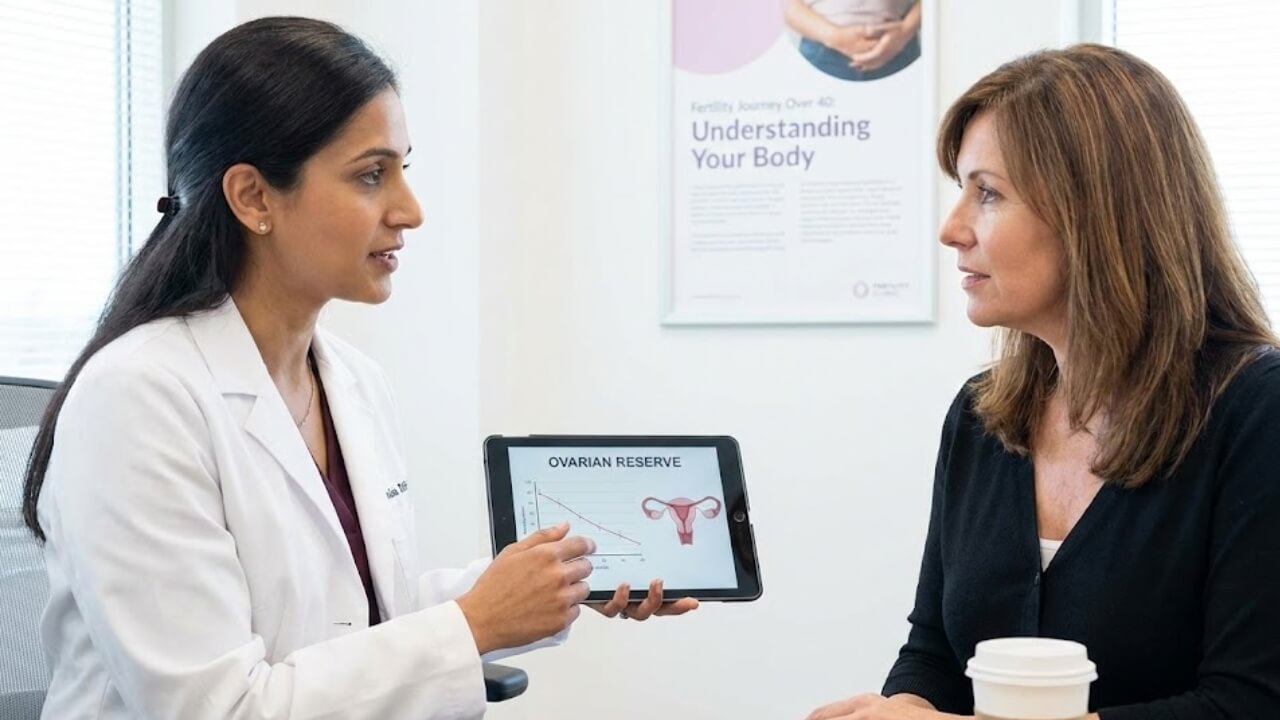
Ovarian reserve refers to the quantity and quality of eggs remaining in your ovaries. Unlike men, who produce sperm continuously throughout life, women are born with all the eggs they’ll ever have—approximately 1-2 million at birth.
The Numbers:
- At birth: 1-2 million eggs
- At puberty: About 300,000-400,000 eggs remain
- Age 37: Significant decline accelerates
- Age 40: Approximately 25,000 eggs remain (seems like a lot, but quality matters more than quantity)
- Age 45: Fewer than 10,000 eggs
- At menopause (average age 51): Fewer than 1,000 eggs
How Age Affects Your Fertility
Declining Egg Quantity
While you have thousands of eggs remaining at 40, the rate of decline accelerates dramatically after age 37. Each month, multiple eggs begin to mature, but typically only one is released during ovulation. The rest dissolve. This process continues whether you’re trying to conceive, using birth control, or pregnant.
Decreasing Egg Quality (The Bigger Issue)
Egg quality declines more significantly than quantity and is the primary reason fertility decreases with age.
What “Egg Quality” Means:
- Chromosomal normality (correct number of chromosomes)
- Ability to be fertilized
- Ability to develop into healthy embryo
- Ability to implant in uterus
- Ability to result in healthy pregnancy
Why Egg Quality Declines:
- Eggs have been in your ovaries since before you were born
- At 40, your eggs are 40+ years old
- Over time, the cellular machinery degrades
- Chromosomal errors become increasingly common
- The “spindle” that divides chromosomes during fertilization functions less accurately
Chromosomal Abnormalities:
- Age 25: About 20% of eggs have chromosomal abnormalities
- Age 40: About 60% of eggs have chromosomal abnormalities
- Age 42: About 80% of eggs have chromosomal abnormalities
- Age 44+: Over 90% of eggs have chromosomal abnormalities
These abnormal eggs either don’t fertilize, don’t develop, don’t implant, or result in miscarriage. This is why the miscarriage rate increases dramatically with age.
Deteriorating Ovarian Environment
The ovarian environment—the hormonal and cellular conditions where eggs develop—also declines with age.
Changes Include:
- Decreased androgen levels: Androgens (including DHEA and testosterone) support egg development; levels decline with age
- Reduced blood flow to ovaries
- Changes in follicular fluid that surrounds developing eggs
- Altered hormone responsiveness
These changes mean that even the “good” eggs you have may not develop optimally.
Hormonal Changes
FSH (Follicle Stimulating Hormone) Increases: As egg quality and quantity decline, your brain releases more FSH trying to stimulate ovulation. Rising FSH levels (typically above 10 on day 3 of cycle) indicate declining ovarian reserve.
AMH (Anti-Müllerian Hormone) Decreases: AMH is produced by small follicles in your ovaries. Lower AMH levels indicate fewer remaining eggs. By age 40, AMH levels are significantly lower than in younger women.
The Reality of Natural Conception After 40
Chance of Pregnancy Per Cycle:
- Age 40: About 5% per cycle (compared to 20% at age 30)
- Age 42: About 2-3% per cycle
- Age 44: About 1% per cycle
- Age 45+: Less than 1% per cycle
Time to Conception: Even for women who do conceive naturally after 40, it typically takes longer—often 6-12 months or more.
Miscarriage Risk:
- Age 40: About 40% risk
- Age 42: About 50% risk
- Age 44: About 60% risk
- Age 45+: Over 75% risk
Most miscarriages after age 40 are due to chromosomal abnormalities in the egg.
Live Birth Rate Per Conception: When you combine decreased conception rates with increased miscarriage risk, the chance of achieving a live birth each cycle is very low after age 40—typically less than 2-3% per cycle.
Fertility Testing at This Age
If you’re 40 or older and want to conceive, comprehensive fertility testing helps you understand your specific situation.
Essential Tests:
Day 2-3 Hormone Testing:
- FSH (Follicle Stimulating Hormone): Ideally below 10; levels above 10-15 indicate decreased ovarian reserve
- AMH (Anti-Müllerian Hormone): Lower levels indicate fewer remaining eggs; typically below 1.0 ng/mL by age 40
- Estradiol (E2): Should be measured with FSH (high estradiol can falsely suppress FSH)
- LH (Luteinizing Hormone)
- TSH (Thyroid): Thyroid problems can affect fertility
Antral Follicle Count (AFC): Transvaginal ultrasound on day 2-5 of cycle counts small follicles visible in ovaries. Lower counts indicate decreased ovarian reserve. Typical AFC at age 40: 5-10 follicles (compared to 15-30 at age 25).
Additional Testing:
- HSG test (checking fallopian tubes are open)
- General health screening
- Partner’s semen analysis (male factor contributes to 40% of infertility at any age)
Interpreting Results: Testing provides information about ovarian reserve but cannot predict egg quality directly. Even with “good” reserve numbers, egg quality is likely compromised simply due to age.
What This Means for Your Conception Plans
Be Realistic: If you’re over 40 and want to conceive:
- Natural conception is possible but less likely
- It may take longer than you expect
- Miscarriage risk is significant
- Multiple attempts may be needed
- Consider seeking fertility treatment sooner rather than later
Don’t Wait: If you’re trying to conceive naturally:
- Seek fertility evaluation after 3 months of trying (not the usual 6-12 months recommended for younger women)
- Time is critical at this age
- Each passing month decreases your chances
Consider All Options:
- IVF with own eggs (success rates decline significantly after 40)
- Donor eggs (much higher success rates—50-60% per cycle)
- Adoption
- Remaining childfree
Your Individual Situation: While statistics provide general guidance, every woman is different. Some 40-year-olds have better ovarian reserve than others. Fertility testing helps assess your specific situation, though it can’t predict outcomes with certainty.
Factors That May Help (Marginally)
While nothing can reverse age-related fertility decline, some factors may help optimize whatever fertility potential you have:
DHEA Supplementation: Some studies suggest DHEA (dehydroepiandrosterone) supplementation may improve ovarian environment and egg quality in women with diminished ovarian reserve. Typical dose: 75mg daily for at least 6-8 weeks before fertility treatment. Discuss with your fertility specialist.
CoQ10 (Ubiquinol): Antioxidant that may support egg quality. Typical dose: 600mg daily of ubiquinol form. Limited evidence but unlikely to harm.
Healthy Lifestyle:
- Maintain healthy weight (BMI 18.5-24.9)
- Don’t smoke (dramatically accelerates ovarian aging)
- Limit alcohol
- Manage stress
- Eat nutritious diet
- Regular moderate exercise
Treat Underlying Conditions:
- Control diabetes
- Manage thyroid disorders
- Address PCOS if present
Realistic Expectations: These interventions may help marginally but cannot overcome the fundamental biology of aging eggs. They’re worth trying but shouldn’t give false hope.
The Emotional Reality
Learning about age-related fertility decline can be devastating, especially if you weren’t ready for children earlier or didn’t meet the right partner until later. These feelings are valid:
- Grief for lost time or opportunities
- Anger at biological inequality (men can father children much later)
- Frustration that this information isn’t discussed more openly
- Sadness about limited options
- Anxiety about running out of time
You’re Not Alone: More women are trying to conceive after 40 than ever before. You’re part of a growing community facing these challenges.
Give Yourself Permission:
- To feel however you feel
- To grieve if needed
- To explore all options thoroughly
- To make the choice that’s right for you
- To change your mind
Moving Forward
If You Want to Pursue Pregnancy:
- See fertility specialist promptly (don’t delay)
- Get comprehensive fertility testing
- Understand success rates realistically
- Explore all treatment options including donor eggs
- Set timeline and financial limits
- Prepare emotionally for possible disappointment
- Have backup plans
If You’re Reconsidering:
- It’s okay to change course
- Many paths to fulfilling life exist beyond biological children
- Adoption, fostering, mentoring, and childfree living are all valid choices
- You’re not “giving up”—you’re making informed decisions
Resources and Support:
- Fertility specialist
- Reproductive psychologist
- Support groups for women TTC after 40
- Online communities
- Consider counseling to process emotions
Looking Ahead
Understanding your fertility at 40+ is empowering, even when the information is difficult. Knowledge allows you to make informed decisions about your reproductive future, whether that means pursuing aggressive fertility treatment, considering alternatives like donor eggs, or choosing a different path entirely.
Whatever you decide, you deserve support, compassion (from yourself and others), and access to accurate information. Your worth is not determined by your fertility, and many beautiful futures exist regardless of the path you take.