

Becoming Mobile and Independent
The second half of baby’s first year is filled with exciting milestones—sitting independently, crawling, pulling to stand, possibly those first magical steps, and maybe even a few words. Your baby is transforming from an infant into a small person with clear preferences, emerging language, and increasing independence. This is an exciting, exhausting, and rewarding time!
Physical Development and Motor Skills
Sitting:
- 6-7 months: Sits independently without support; can play with toys while sitting
- 7-12 months: Sits confidently, pivots while sitting to reach toys, transitions in and out of sitting position independently
Crawling and Mobility:
- 6-7 months: May begin scooting, army crawling, or creeping
- 7-9 months: Most babies crawl (hands and knees), though some skip crawling entirely
- Crawling variations: All normal—traditional crawl, bear crawl, bottom scooting, rolling, or commando crawl
- 9-12 months: Crawls efficiently, may crawl up stairs (can’t come down safely yet)
Some babies never crawl and go straight to walking—this is perfectly normal.
Standing and Cruising:
- 7-9 months: Pulls to standing using furniture
- 8-10 months: Stands holding onto furniture
- 9-11 months: “Cruises” (walks sideways holding furniture)
- May stand independently briefly (lets go of furniture for a few seconds)
Walking:
- 9-12 months: Some babies take first steps
- Most babies: Walk between 12-15 months
- Some babies: Don’t walk until 16-18 months
- All normal: Wide variation in walking age
Safety Note: Once mobile, baby-proofing becomes essential!
Hand Skills and Fine Motor:
6-7 Months:
- Raking grasp (uses hand like a rake to pull small objects closer)
- Transfers objects hand to hand smoothly
- Bangs two objects together
- Still mouths everything
7-9 Months:
- Pincer grasp develops (thumb and forefinger pick up small objects)—around 8-9 months
- Points at objects with index finger
- Picks up small objects precisely
- Feeds self finger foods
9-12 Months:
- Refined pincer grasp (can pick up tiny objects)
- May hold spoon (though messy!)
- Stacks blocks (may stack 2 blocks by 12 months)
- Turns pages of board books (several at once)
- Points to indicate wants
- May wave bye-bye and clap hands
Cognitive Development
Object Permanence:
- 6-8 months: Begins understanding objects exist even when hidden
- 8-12 months: Actively searches for hidden objects
- Plays peek-a-boo understanding you’re still there even when hidden
Cause and Effect:
- Drops objects intentionally to watch them fall (this is learning, not naughtiness!)
- Presses buttons to make toys work
- Understands their actions produce results
- Tests gravity repeatedly (by dropping everything!)
Problem Solving:
- Figures out how to reach desired objects
- Removes obstacles to get to toys
- May use one toy to reach another
- Trial and error learning
Memory:
- Recognizes familiar people, places, and objects
- Remembers games and routines
- Anticipates next steps in familiar sequences
- Looks for objects in places they’re usually found
Exploration:
- Explores everything by touching, shaking, banging, dropping, and mouthing
- Opens cabinets and drawers
- Pulls items out of containers
- Examines objects from all angles
Social and Emotional Development
Attachment and Separation Anxiety:
8-9 Months: Separation anxiety peaks
- Cries when you leave the room
- Clings to you around strangers
- This is a POSITIVE developmental milestone (shows healthy attachment)
- May wake more at night wanting reassurance
How to Help:
- Lots of reassurance
- Play peek-a-boo to practice separation and reunion
- Leave and return repeatedly during play
- Keep goodbyes short and cheerful
- Consistency helps baby learn you always come back
- Don’t sneak away (increases anxiety)
This phase passes! Usually improves by 12-15 months.
Stranger Anxiety:
- Baby may cry or cling around unfamiliar people
- Varies by temperament (some babies more cautious than others)
- Normal protective response
- Don’t force interaction with strangers
Social Interaction:
- Copies simple actions (clapping, waving)
- Enjoys games with others (peek-a-boo, pat-a-cake)
- Shows preference for certain people
- May offer toy to you (though doesn’t want to let go!)
- Begins showing empathy (concerned if another baby cries)
- Likes being around other babies (parallel play)
Emotional Expression:
- Shows clear happiness, sadness, anger, frustration, fear
- May have “tantrums” when frustrated (precursor to toddler tantrums)
- Shows affection (cuddles, pats, kisses)
- Asserts independence (“do it myself” attitude emerging)
Communication and Language
Babbling Progresses:
6-9 Months:
- Complex babbling with many consonant-vowel combinations
- Babbling sounds like conversation with intonation
- May say “mama” or “dada” (but not meaningfully yet—just sound practice)
9-12 Months:
- May say first meaningful words (though most first words appear 12-15 months)
- “Mama,” “dada,” “ball,” “dog” common first words
- Babbling continues and may include “jargon” (babbling that sounds like sentences)
- Uses gestures with vocalizations
Receptive Language (Understanding):
- Responds to name consistently
- Understands “no” (though may not always obey!)
- Follows simple one-step directions (“Give me the ball,” “Come here”)
- Recognizes names of familiar people and objects
- Understands many more words than can say
- Responds to simple questions with actions (Where’s daddy? Looks toward daddy)
Communication Without Words:
- Points to communicate wants
- Waves bye-bye and hello
- Shakes head “no”
- Reaches arms to be picked up
- Pushes away unwanted items
- Gestures become increasingly intentional
Encouraging Language:
- Talk constantly about what you’re doing
- Name objects baby shows interest in
- Read books together daily
- Sing songs
- Respond to baby’s babbling as conversation
- Expand on baby’s attempts (“Ba!” “Yes, that’s a ball!”)
- Avoid baby talk—use real words
Sleep Development
Nighttime Sleep:
- Most babies sleep 10-12 hours at night (may include 1-2 brief wake-ups)
- Some babies sleep through the night; others still wake frequently
- Both are normal at this age
Naps:
- 6-9 months: Usually 2-3 naps (morning, midday, possibly late afternoon)
- 9-12 months: Transition to 2 naps (morning and afternoon)
- Total daytime sleep: 2-4 hours
Sleep Challenges:
- 8-10 month sleep regression: Common due to separation anxiety and developmental leaps
- Increased mobility can disrupt sleep (baby practices new skills in crib)
- Teething may disturb sleep
- Separation anxiety causes night waking
Sleep Training: If desired, this age range works well for sleep training methods. But sleep training is optional—do what works for your family.
Feeding Development
Breast Milk or Formula: Remains primary nutrition through 12 months, but solid foods become increasingly important.
Solid Foods Progression:
6-8 Months:
- Beginning solids or advancing from first foods
- Purees or baby-led weaning
- One new food every 3-5 days
- 1-2 meals per day
- Focus on iron-rich foods
8-10 Months:
- 2-3 meals per day plus snacks
- Increasing texture (thicker purees, mashed foods, soft chunks)
- More variety of foods
- Self-feeding with fingers
- Introducing cup (sippy cup or open cup)
10-12 Months:
- 3 meals plus 1-2 snacks
- Eating more table foods (soft pieces)
- Self-feeding with fingers (spoon too messy still)
- Drinking from cup (breast milk, formula, or water)
- Participating in family meals
Foods to Avoid Before 12 Months:
- Honey (botulism risk)
- Whole cow’s milk as main drink (can offer small amounts in cooking)
- Choking hazards (whole grapes, nuts, hard raw vegetables, popcorn)
- High-sodium or high-sugar foods
Allergy Introduction: Current guidelines recommend introducing common allergens (peanuts, eggs, dairy, wheat, soy, tree nuts, fish, shellfish) between 6-12 months to reduce allergy risk. Introduce one at a time and watch for reactions.
Self-Feeding:
- Allow baby to self-feed finger foods
- Expect mess—this is learning!
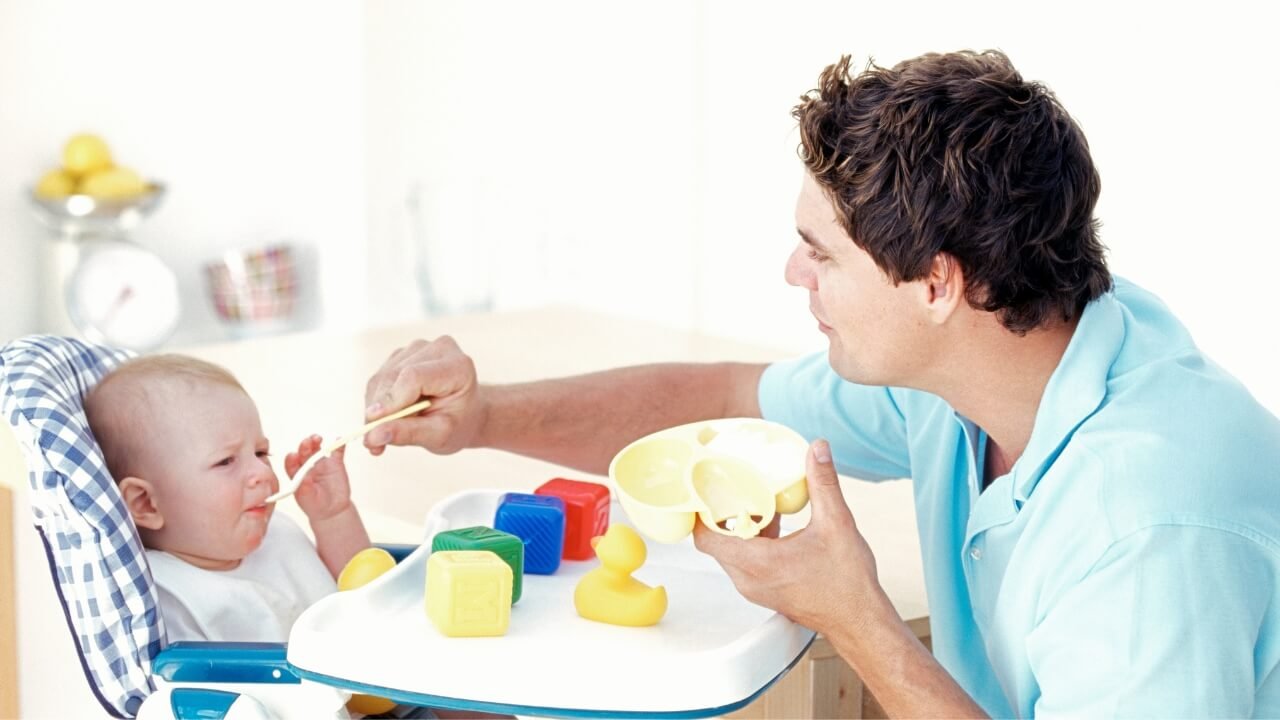
- Offer spoon (baby will mostly play, occasionally get food to mouth)
- Never leave baby alone while eating
Teething Continues
6-12 Months:
- Most babies get 4-8 teeth during this period
- Usually bottom two center teeth first, then top two center
- Then lateral incisors (next to center teeth)
- Wide variation in timing is normal
Teething Relief: Same strategies as earlier:
- Cold teething toys
- Gentle gum massage
- Age-appropriate pain reliever if needed
Age-Appropriate Play and Activities
Physical Play:
- Crawling “obstacle courses” (pillows, tunnels)
- Playing with balls (rolling, chasing)
- Push and pull toys
- Activity tables to practice standing
- Stacking and nesting toys
- Climbing (supervised)
Fine Motor Play:
- Blocks to stack and knock down
- Nesting cups
- Shape sorters
- Simple puzzles (large pieces)
- Containers to fill and dump
- Books to turn pages
Social Play:
- Peek-a-boo, pat-a-cake, and other interactive games
- Songs with actions (If You’re Happy and You Know It)
- Playing with other babies (parallel play—near each other but not together)
- Hide and seek with toys
Cognitive Play:
- Hiding toys for baby to find
- Containers to open and close
- Cause-and-effect toys
- Water play (supervised)
- Exploring textures
Music and Reading:
- Sing songs and nursery rhymes
- Dance together
- Read books daily (board books baby can help hold)
- Musical instruments (shakers, drums, xylophones)
Best Toys:
- Stacking blocks or rings
- Nesting cups
- Push toys (once cruising)
- Shape sorters
- Simple puzzles (large knobs)
- Balls of various sizes
- Board books
- Musical toys
- Bath toys
- Cause-and-effect toys
Screen Time: Not recommended before 18-24 months except for video chatting with family.
Baby-Proofing
Now Essential:
- Secure furniture to walls (babies pull up on everything)
- Gates at top and bottom of stairs
- Cabinet and drawer locks
- Outlet covers
- Toilet locks
- Keep cleaning products, medications, and hazards locked away
- Remove choking hazards
- Pad sharp furniture corners
- Secure cords and strings
- Remove or secure unstable furniture
Check from baby’s perspective—get down on floor and look around.
Developmental Red Flags
Contact pediatrician if by 12 months baby:
- Doesn’t crawl or show some mobility
- Can’t stand with support
- Doesn’t search for hidden objects
- Doesn’t say single words like “mama” or “dada” (even if not used correctly)
- Doesn’t learn gestures like waving or shaking head
- Doesn’t point to objects
- Loses skills previously mastered
- Shows no interest in interactive games
- Doesn’t respond to name by 9 months
- Your parental instinct says something isn’t right
Remember: Development varies, but persistent concerns should be discussed with pediatrician. Early intervention helps if needed.
First Birthday
Your baby is almost a toddler! At 12 months:
- May take first steps or be very close
- Says 1-2 words meaningfully
- Follows simple directions
- Recognizes family members
- Shows clear personality and preferences
- Feeds self finger foods
- Drinks from cup
- Has transformed from helpless newborn to mobile, communicative little person
Celebrate this incredible first year—you’ve both accomplished so much!