

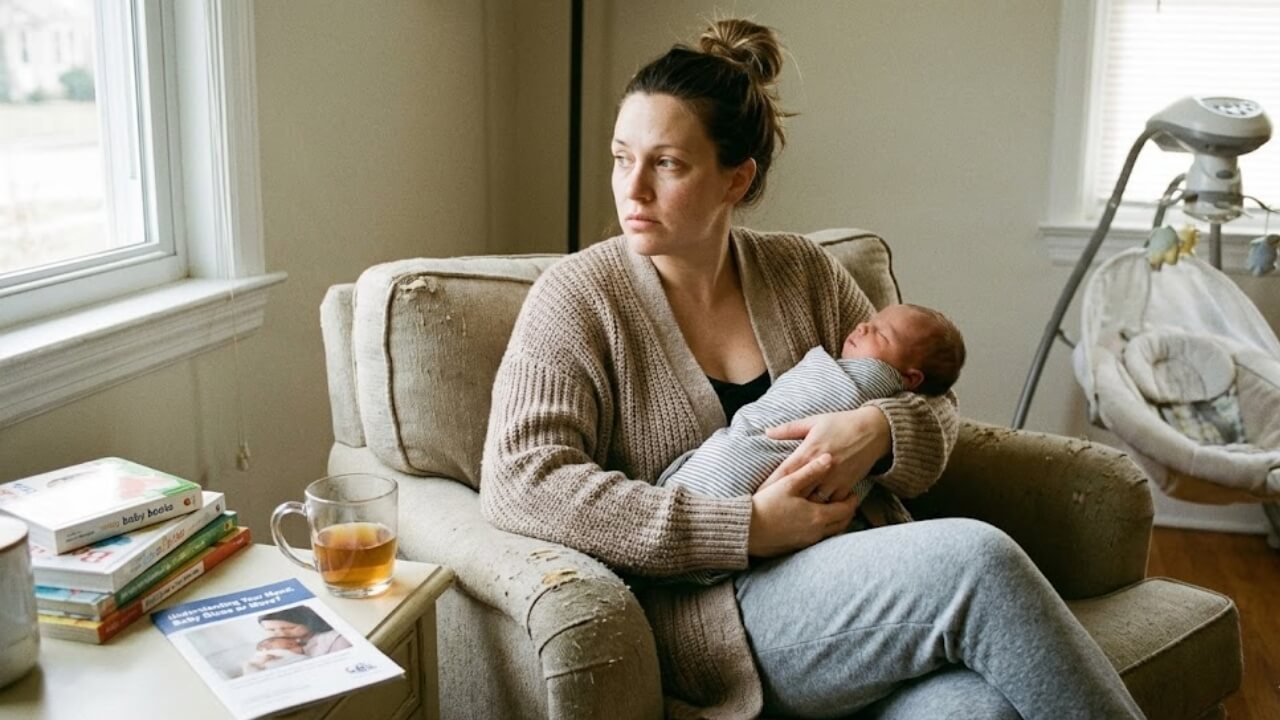
Understanding Your Postpartum Emotions
After giving birth, it’s completely normal to experience a wide range of emotions—from overwhelming joy to unexpected sadness. Understanding the difference between “baby blues” (common and temporary) and postpartum depression (serious but treatable) helps you know when you need support and when to seek professional help.
Baby Blues: Very Common and Temporary
What Are Baby Blues? Baby blues are emotional ups and downs that affect up to 80% of new mothers. They typically begin 2-3 days after delivery and last up to two weeks.
Symptoms of Baby Blues:
- Mood swings: Happy one moment, crying the next
- Crying spells: Often without obvious reason
- Anxiety: Worrying about the baby and your abilities as a mother
- Irritability: Feeling short-tempered or easily frustrated
- Feeling overwhelmed: Everything seems too much
- Difficulty concentrating: Trouble focusing on tasks
- Sadness: Waves of feeling down or blue
- Sleep problems: Even when baby sleeps (often due to anxiety)
- Appetite changes: Eating more or less than usual
Despite these symptoms, you can still:
- Function in daily activities
- Bond with and care for your baby
- Experience joy and positive emotions
- See these feelings coming and going in waves
Why Baby Blues Happen: Baby blues result from:
- Dramatic hormonal shifts: Estrogen and progesterone plummet immediately after delivery
- Physical exhaustion: Recovery from birth, sleep deprivation
- Emotional adjustment: Enormous life change, new responsibility
- Lifestyle disruption: Loss of old routine and identity
- Overwhelm: Learning to care for completely dependent newborn
What Helps Baby Blues:
Rest:
- Sleep when baby sleeps (really!)
- Accept offers to hold baby while you nap
- Let household chores wait
Support:
- Talk to your partner, family, or friends about how you’re feeling
- Accept help with meals, housework, baby care
- Don’t isolate yourself
Realistic Expectations:
- It’s okay not to feel instant overwhelming love for baby
- It’s normal not to enjoy every moment
- You don’t need to be a perfect mother
- Your house doesn’t need to be clean
Self-Care:
- Shower and get dressed (helps mood)
- Get outside briefly if possible
- Eat regular, nutritious meals
- Stay hydrated
Reassurance:
- These feelings are temporary
- You’re not a bad mother
- This doesn’t mean you’ll have postpartum depression
- Most women feel significantly better within 1-2 weeks
Baby blues resolve on their own without treatment as hormones stabilize and you adjust to motherhood.
Postpartum Depression: Serious but Treatable
What Is Postpartum Depression (PPD)? Postpartum depression is a medical condition affecting 10-15% of new mothers (1 in 7-10). It’s more intense and long-lasting than baby blues, and it doesn’t go away on its own. PPD is NOT your fault, NOT a sign of weakness, and NOT something you can just “snap out of.”
Symptoms of PPD:
Emotional Symptoms:
- Persistent sadness or emptiness: Feeling down most of the day, nearly every day
- Loss of interest or pleasure: No enjoyment in things you used to enjoy, including your baby
- Severe anxiety or panic attacks: Overwhelming worry, racing thoughts, physical panic symptoms
- Feelings of worthlessness or guilt: Believing you’re a bad mother or failing
- Hopelessness: Feeling like things will never get better
- Feeling disconnected: Not feeling bonded to your baby or feeling nothing toward baby
Physical Symptoms:
- Sleep problems: Can’t sleep even when baby sleeps, or sleeping too much
- Appetite changes: Eating much more or much less than normal
- Fatigue and no energy: Extreme exhaustion that doesn’t improve with rest
- Physical aches and pains: Without clear physical cause
Behavioral Symptoms:
- Difficulty bonding with baby: Feeling detached or disinterested
- Withdrawing from others: Avoiding family and friends
- Inability to care for yourself or baby: Too overwhelmed to handle basic tasks
- Difficulty concentrating or making decisions: Can’t think clearly
- Excessive crying: Crying frequently and uncontrollably
Severe Symptoms (Require Immediate Help):
- Thoughts of harming yourself or your baby
- Thoughts that you or baby would be better off dead
- Thoughts about hurting yourself or baby
- Feeling like baby isn’t yours or you’re not baby’s mother
If you have any thoughts of self-harm or harming baby, seek help IMMEDIATELY. Call emergency services, go to emergency room, or call crisis hotline: 988 (Suicide & Crisis Lifeline).
When PPD Develops:
- Can start any time in the first year after delivery
- Most commonly begins within first 3 months
- Sometimes starts during pregnancy (prenatal depression)
Difference from Baby Blues:
- Duration: PPD lasts longer than 2 weeks (baby blues resolve within 2 weeks)
- Severity: Symptoms are more intense and interfere with daily functioning
- Bonding: PPD often includes difficulty bonding with baby
- Function: PPD prevents you from caring for yourself and baby
Risk Factors for PPD
You’re at higher risk if you have:
- Previous history of depression or anxiety
- Previous postpartum depression
- Family history of depression or mental illness
- Lack of social support
- Relationship problems
- Financial stress
- Unplanned or unwanted pregnancy
- Pregnancy or birth complications
- Baby with health problems or special needs
- History of trauma or abuse
- Thyroid problems
However, PPD can affect ANY mother, even without risk factors.
Other Postpartum Mood Disorders
Postpartum Anxiety: Severe, persistent worry and anxiety (may occur with or without depression):
- Constant worrying about baby’s health and safety
- Racing thoughts
- Difficulty sleeping due to anxiety
- Physical symptoms: rapid heartbeat, nausea, difficulty breathing
- Sometimes includes intrusive thoughts (disturbing thoughts you don’t want)
Postpartum Obsessive-Compulsive Disorder (OCD): Intrusive, scary thoughts about baby (that you don’t want and wouldn’t act on) plus compulsive behaviors to reduce anxiety:
- Intrusive thoughts of accidentally or intentionally harming baby
- Extreme fear of being alone with baby
- Checking behaviors (constantly checking if baby is breathing)
- These mothers are NOT dangerous to their babies—they’re terrified of these unwanted thoughts
Postpartum Psychosis (RARE Emergency): Extremely rare (1-2 per 1,000 mothers) but psychiatric emergency:
- Confusion and disorientation
- Hallucinations (seeing or hearing things not there)
- Delusions (false beliefs)
- Paranoia
- Rapid mood swings
- Inability to sleep
- Thoughts of harming baby
Postpartum psychosis requires immediate emergency treatment. Call 911 or go to emergency room immediately.
Getting Help for PPD
When to Seek Help: If you experience symptoms of depression or anxiety that:
- Last longer than two weeks
- Are getting worse instead of better
- Interfere with your ability to function
- Interfere with caring for your baby or yourself
- Include thoughts of harming yourself or baby
Don’t wait—the sooner you get help, the sooner you’ll feel better.
Where to Get Help:
Talk to Your Healthcare Provider:
- Your OB/GYN or midwife
- Your primary care doctor
- Your pediatrician (they screen mothers too)
- Tell them honestly how you’re feeling
Contact a Mental Health Professional:
- Therapist or counselor specializing in postpartum issues
- Psychiatrist who can prescribe medication
- Many offer telehealth appointments
Call a Hotline:
- 988 Suicide & Crisis Lifeline: For immediate crisis
- Postpartum Support International: 1-800-944-4773 (call or text)
- Emergency Contact: 026965055
Join a Support Group:
- In-person or online support groups for mothers with PPD
- Connecting with others who understand is powerful
Treatment for PPD
PPD is highly treatable. Most women feel significantly better with treatment.
Treatment Options:
Psychotherapy (Talk Therapy):
- Cognitive Behavioral Therapy (CBT): Helps change negative thought patterns
- Interpersonal Therapy (IPT): Focuses on relationships and life changes
- Therapy alone can effectively treat mild to moderate PPD
- Can be done in-person or via telehealth
Medication:
- Antidepressants: Usually selective serotonin reuptake inhibitors (SSRIs)
- Many antidepressants are safe during breastfeeding
- Take 2-4 weeks to work fully, but many women notice improvement within 1-2 weeks
- Usually taken for at least 6-12 months after feeling better
- Your doctor will help you choose safest option for breastfeeding
Combination Therapy: Therapy plus medication often works better than either alone, especially for moderate to severe PPD.
Support:
- Partner support and involvement
- Family help with baby care
- Support groups
- Rest and self-care
Don’t Let These Myths Stop You from Getting Help:
Myth: “I should be happy—I have a healthy baby.” Truth: PPD is a medical condition caused by hormones and brain chemistry, not your circumstances or feelings about your baby.
Myth: “I’m a bad mother for feeling this way.” Truth: PPD doesn’t make you a bad mother. Getting treatment makes you a good mother who’s taking care of herself so she can care for her baby.
Myth: “I can’t take medication while breastfeeding.” Truth: Many antidepressants are safe while breastfeeding. Untreated depression is worse for your baby than medication.
Myth: “I should be able to handle this myself.” Truth: You wouldn’t refuse treatment for diabetes or a broken leg. PPD is a medical condition that requires treatment.
Myth: “Asking for help means I’ve failed.” Truth: Asking for help is a sign of strength and good judgment.
Supporting Your Recovery
While Getting Treatment:
- Be patient—recovery takes time, but you will feel better
- Take medication as prescribed (don’t stop when you feel better without talking to doctor)
- Attend therapy appointments
- Accept help from others
- Rest as much as possible
- Eat well and stay hydrated
- Get outside briefly each day if possible
- Connect with other mothers who understand
For Partners and Family:
How to Help:
- Take over baby care and household tasks when possible
- Encourage her to seek help without judgment
- Attend appointments with her if she wants
- Watch for worsening symptoms
- Don’t minimize her feelings or say “you’ll feel better soon”
- Listen without trying to fix everything
- Tell her she’s doing a good job and you’re there for her
What NOT to Say:
- “Just think positive”
- “So many women would love to have your problems”
- “You should be grateful for your baby”
- “It’s just hormones—you’ll get over it”
What TO Say:
- “This is not your fault”
- “You’re a good mother”
- “I’m here for you”
- “Let’s get you some help”
- “What do you need right now?”
You Will Feel Better
If you’re experiencing postpartum depression, please know: This is temporary. Treatment works. You will feel like yourself again. PPD doesn’t define you or your motherhood journey. With proper support and treatment, you’ll be able to bond with your baby, enjoy motherhood, and feel healthy again.
You’re not alone. You didn’t do anything wrong. You deserve support and treatment. Reach out today.