

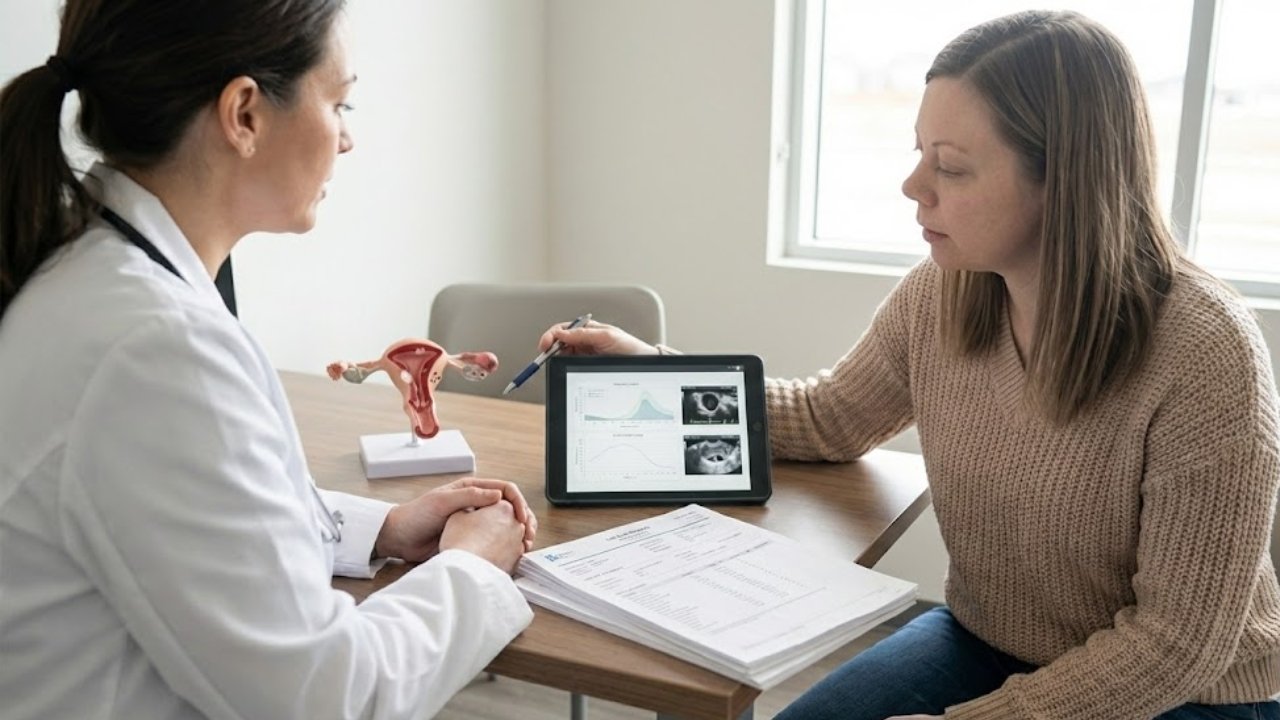
Comprehensive testing identifies the cause of infertility and guides your treatment plan.
When Testing Happens
Timing is critical for accurate results:
Initial bloodwork: Day 2-3 of your menstrual cycle
- “Day 1” = first day of full flow (not spotting)
- Tests hormone levels at baseline
- Must be done these specific days
Ultrasound: Day 2-3 or as directed
HSG test: Day 5-10 of cycle (after period ends, before ovulation)
Other tests: As directed by your fertility specialist
Hormone Blood Tests (Day 2-3)
FSH (Follicle Stimulating Hormone)
What it measures:
- Hormone that stimulates follicles to grow
- Produced by pituitary gland
- Indicates ovarian reserve
Normal levels (Day 2-3):
- Under 10 mIU/mL: Excellent
- 10-15 mIU/mL: Normal
- 15-20 mIU/mL: Diminished reserve
- Over 20 mIU/mL: Very low reserve
High FSH means:
- Ovaries working harder to produce follicles
- Diminished ovarian reserve
- Lower egg quality/quantity
- May need more aggressive treatment
FSH can vary cycle to cycle – one high result doesn’t tell whole story.
LH (Luteinizing Hormone)
What it measures:
- Hormone that triggers ovulation
- Produced by pituitary gland
- Indicates ovulatory function
Normal levels (Day 2-3):
- 1-12 mIU/mL typically
- Should be similar to or lower than FSH
High LH (especially if LH > FSH):
- May indicate PCOS
- Suggests ovulation problems
LH surge at ovulation is normal and expected – this test checks baseline, not ovulation.
AMH (Anti-Mullerian Hormone)
What it measures:
- Hormone produced by follicles in ovaries
- Best indicator of ovarian reserve (egg count)
- Reflects number of remaining eggs
Why it’s valuable:
- Can be tested any day of cycle
- Doesn’t fluctuate month to month
- Most accurate reserve assessment
- Predicts response to IVF medications
Normal levels:
- High (PCOS): Over 5 ng/mL
- Normal: 1.5-4.0 ng/mL
- Low: 0.5-1.5 ng/mL
- Very low: Under 0.5 ng/mL
What results mean:
- High AMH: Good egg reserve (may indicate PCOS)
- Normal AMH: Normal reserve for age
- Low AMH: Diminished reserve, may need aggressive treatment
- Very low AMH: Significant concerns, consider donor eggs
Important: AMH indicates quantity, not quality. Age affects quality.
Serum TSH (Thyroid Stimulating Hormone)
What it measures:
- Thyroid function
- Critical for fertility and pregnancy
Normal range for fertility:
- 0.5-2.5 mIU/L (tighter than general population)
- Some doctors prefer under 2.0
Why it matters:
- Thyroid affects ovulation
- Impacts implantation
- Crucial for early pregnancy development
- Miscarriage risk if untreated
Hypothyroidism (high TSH):
- Most common thyroid issue
- Can prevent conception
- Easily treated with medication (levothyroxine)
- Retest until optimal range
Hyperthyroidism (low TSH):
- Less common
- Also affects fertility
- Needs treatment before conception
Prolactin
What it measures:
- Hormone that produces breast milk
- Normally elevated during breastfeeding
Why tested:
- High levels when not breastfeeding can prevent ovulation
- May indicate pituitary tumor (usually benign)
Normal range:
- Under 25 ng/mL (varies by lab)
If elevated:
- May need medication (bromocriptine or cabergoline)
- Further testing of pituitary
- Treatment often restores ovulation
Estradiol (E2)
What it measures:
- Main estrogen hormone
- Produced by developing follicles
Normal Day 2-3 levels:
- Under 50-80 pg/mL (varies by clinic)
Why it matters:
- High Day 3 estradiol may mask elevated FSH
- Indicates ovarian reserve concerns
- Affects treatment protocol
Progesterone (Day 21 or 7 Days Post-Ovulation)
What it measures:
- Confirms ovulation occurred
- Luteal phase adequacy
Timing critical:
- Must be 7 days after ovulation
- “Day 21” assumes 28-day cycle
- Adjust if your cycle is longer/shorter
Normal levels:
- Over 10 ng/mL confirms ovulation
- Over 15 ng/mL indicates strong ovulation
Low progesterone:
- May indicate weak ovulation
- Luteal phase defect
- Supplementation may help
Complete Blood Count (CBC)
What it checks:
- Hemoglobin and iron levels (anemia screening)
- White blood cells (infection/immunity)
- Platelets (clotting)
Why it matters:
- Anemia common in women (heavy periods)
- Needs correction before pregnancy
- General health assessment
Blood Group & Rh Typing
What it determines:
- Your blood type (A, B, AB, or O)
- Rh factor (positive or negative)
Why it matters:
- Rh negative women need special care
- If baby is Rh positive (from partner), need RhoGAM shots
- Prevents antibody development
- Critical for pregnancy management
Partner may need blood typing too if you’re Rh negative.
Pelvic Ultrasound
What’s examined:
Uterus Evaluation
Checking for:
- Size and shape
- Fibroids (benign tumors)
- Polyps (growths in lining)
- Uterine abnormalities (septum, bicornuate)
- Endometrial lining thickness
Impact on fertility:
- Fibroids may block tubes or affect implantation
- Polyps can prevent implantation
- Uterine abnormalities may need correction
- Thin lining may need treatment
Ovary Assessment
Checking for:
- Size and appearance
- Cysts (functional vs. problematic)
- PCOS appearance (multiple small follicles)
- Masses or abnormalities
PCOS appearance:
- “String of pearls” look
- Multiple small follicles around ovary edge
- 12 or more follicles per ovary
Antral Follicle Count (AFC)
Counting resting follicles:
- Small follicles visible at start of cycle
- Each follicle potentially contains an egg
- Best done Day 2-3
What counts mean:
- High (over 20 per ovary): Excellent reserve (may indicate PCOS)
- Normal (10-20 per ovary): Good reserve
- Low (5-10 per ovary): Diminished reserve
- Very low (under 5 per ovary): Very low reserve
AFC plus AMH give best reserve picture.
Fallopian Tubes
Ultrasound doesn’t show tubes well:
- Can’t determine if open or blocked
- HSG test needed for tubal evaluation
HSG Test (Hysterosalpingogram)
X-ray of uterus and fallopian tubes
What It Checks
Evaluates:
- Tubal patency (are tubes open?)
- Uterine cavity shape
- Blockages or abnormalities
- Scarring from previous infections
Why it’s critical:
- Blocked tubes prevent natural conception
- Determines if IUI is possible
- If both tubes blocked, need IVF
- May find uterine issues
When It’s Done
Timing:
- Day 5-10 of cycle
- After period ends, before ovulation
- When pregnancy impossible
Required before IUI:
- Must have at least one open tube for IUI
- Otherwise sperm can’t reach egg
The Procedure
What to expect:
Preparation:
- Take ibuprofen 1 hour before (400-600mg)
- Empty bladder
- Wear comfortable clothing
- Bring pad (will have discharge after)
During procedure (10-15 minutes):
- Speculum inserted (like Pap smear)
- Thin catheter through cervix into uterus
- Dye injected (you may feel cramping)
- X-rays taken as dye flows through tubes
- Can see on screen if tubes open
Pain level:
- Varies widely
- Ranges from mild cramping to quite painful
- Usually tolerable and brief
- Worst during dye injection
After:
- Cramping may continue few hours
- Spotting normal
- Discharge of dye (use pad)
- Rest of day if needed
Understanding Results
Both tubes open (patent):
- Best scenario
- Natural conception possible
- IUI is option
- IVF also possible
One tube open:
- Can still conceive naturally
- IUI still option (50% effectiveness)
- IVF may be recommended
Both tubes blocked:
- Natural conception not possible
- IUI won’t work
- IVF bypasses tubes (best option)
- Surgery possible for some blockages
Hydrosalpinx (fluid-filled tube):
- Blocked tube filled with fluid
- Reduces IVF success
- Surgical removal often recommended before IVF
Possible Complications
Rare but possible:
- Infection (very rare)
- Allergic reaction to dye
- Uterine perforation (extremely rare)
Call doctor if:
- Fever after procedure
- Severe pain
- Heavy bleeding
- Foul-smelling discharge
Therapeutic Benefit
Some women conceive shortly after HSG:
- Dye may flush out minor debris
- “Clears the tubes”
- Not guaranteed but happens
- Worth trying naturally for few months after
Additional Tests (If Needed)
Hysteroscopy
Camera inside uterus:
- Diagnoses polyps, fibroids, scarring
- Can treat at same time
- Usually outpatient procedure
Laparoscopy
Camera through small incision:
- Checks for endometriosis
- Evaluates pelvic anatomy
- Treats endometriosis, scar tissue
- More invasive than other tests
Genetic Carrier Screening
Tests for genetic diseases:
- Cystic fibrosis
- Thalassemia
- Sickle cell
- Others based on ethnicity
- Partner tested too if you’re carrier
Chromosome Analysis (Karyotype)
Checks chromosomes:
- For recurrent miscarriage
- Structural abnormalities
- Both partners may need
Interpreting Your Results
Good News Results
What you want to see:
- AMH normal for age
- FSH under 10
- Both tubes open
- Normal uterine cavity
- Regular ovulation (progesterone)
- Normal thyroid
Means:
- Unexplained infertility likely
- Good prognosis with treatment
- May try IUI first
Concerning Results
Need attention:
- High FSH, low AMH (diminished reserve)
- Blocked tubes
- No ovulation
- Thyroid dysfunction
- Uterine abnormalities
Means:
- Specific treatment needed
- May skip to IVF
- Surgical correction possible
- Donor eggs consideration (if severe reserve issues)
Mixed Results
Some good, some concerning:
- Most common scenario
- Guides personalized treatment
- Multiple factors affect success
Your doctor creates plan based on complete picture, not single test.
Questions to Ask About Your Results
Come prepared:
✓ What do my results mean for my chances?
✓ What’s the best treatment for my situation?
✓ Should we try naturally first or move to treatment?
✓ How urgently do we need to act?
✓ Are any results treatable (thyroid, prolactin)?
✓ Do you recommend any additional testing?
✓ What’s our timeline?
Moving Forward After Testing
Results determine your path:
Medication only:
- Clomid or letrozole for ovulation
- Timed intercourse
IUI:
- Open tubes required
- With or without medications
IVF:
- Blocked tubes
- Male factor
- Diminished reserve
- Failed IUI
- Advanced age
Surgery first:
- Endometriosis
- Fibroids
- Uterine issues
Donor options:
- Severely diminished reserve
- Multiple IVF failures
- Advanced age
Remember
Testing provides answers and direction. While results may be difficult to hear, knowledge empowers you to take the right next steps.
Every test result informs your personalized treatment plan.
Even concerning results don’t mean you can’t have a baby – they guide how to get there.
Understanding your fertility gives you control over your options.