

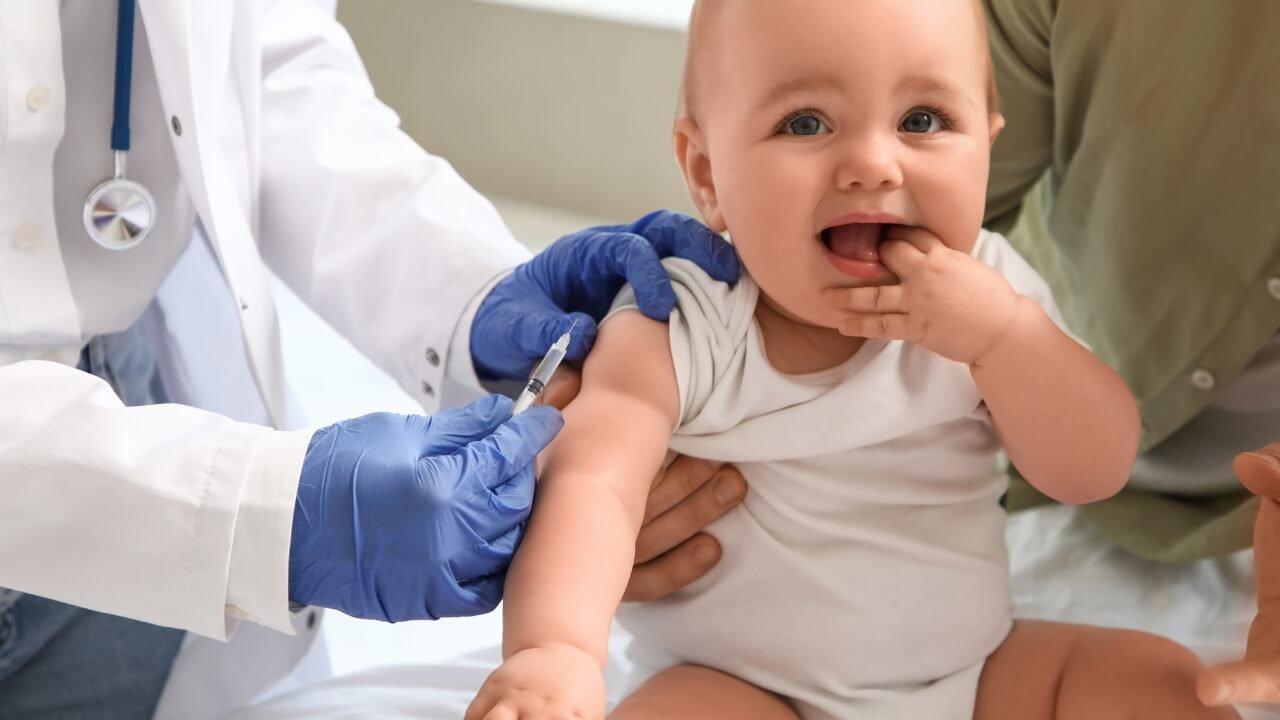
Protecting Your Child’s Health
Vaccines are one of the most important ways you can protect your baby from serious, potentially life-threatening diseases. Understanding which vaccines your baby needs and when helps you keep your child healthy and on schedule. This guide explains the recommended immunization schedule and answers common questions parents have about vaccines.
Why Vaccines Matter
Protection from Serious Diseases: Vaccines protect against diseases that once killed or seriously harmed many children:
- Measles, mumps, rubella
- Whooping cough (pertussis)
- Polio
- Diphtheria
- Tetanus
- Hepatitis A and B
- Rotavirus (severe diarrhea)
- Pneumococcal disease
- Haemophilus influenzae type b (Hib)
- Chickenpox
Community Protection (Herd Immunity): When enough people are vaccinated, it protects those who cannot be vaccinated (babies too young, people with weak immune systems, those with medical contraindications). This is called herd immunity.
Safety Record: Vaccines are thoroughly tested for safety before approval and continuously monitored. Serious side effects are extremely rare. The diseases vaccines prevent are far more dangerous than the vaccines themselves.
Recommended Immunization Schedule (First Year)
At Birth (Hospital or Within First 24 Hours)
Hepatitis B (HepB) – Dose 1
- Protects against hepatitis B virus (causes liver disease and cancer)
- Given as injection in thigh or arm
- Very important if mother is hepatitis B positive
2 Months Old
Multiple vaccines given at this visit:
DTaP (Diphtheria, Tetanus, Pertussis) – Dose 1
- Protects against three serious bacterial diseases
- Given as injection in thigh
Hib (Haemophilus influenzae type b) – Dose 1
- Protects against bacteria causing meningitis, pneumonia, throat swelling
- Given as injection in thigh
IPV (Inactivated Polio Vaccine) – Dose 1
- Protects against polio (can cause paralysis)
- Given as injection in thigh
PCV13 (Pneumococcal Conjugate Vaccine) – Dose 1
- Protects against 13 types of pneumococcal bacteria
- Prevents pneumonia, meningitis, ear infections, bloodstream infections
- Given as injection in thigh
Rotavirus (RV) – Dose 1
- Protects against rotavirus (causes severe diarrhea and dehydration)
- Given orally (drops in mouth, not injection)
Hepatitis B (HepB) – Dose 2
- Second dose of three-dose series
- Given as injection in thigh
Note: Baby receives multiple shots at this visit—typically 4-5 injections plus oral rotavirus. This is safe and necessary for protection.
4 Months Old
Same vaccines as 2-month visit – Dose 2 of each:
- DTaP (Dose 2)
- Hib (Dose 2)
- IPV (Dose 2)
- PCV13 (Dose 2)
- Rotavirus (Dose 2)
6 Months Old
Most vaccines – Dose 3:
- DTaP (Dose 3)
- Hib (Dose 3)—depending on brand used
- PCV13 (Dose 3)
- Rotavirus (Dose 3)—depending on brand (some are 2-dose series)
- Hepatitis B (Dose 3)—given between 6-18 months
- IPV (Dose 3)—can be given between 6-18 months
Influenza Vaccine (Flu Shot):
- Recommended starting at 6 months, given annually
- First year, baby needs two doses one month apart
- Subsequent years, one dose annually
- Best given before flu season (fall)
12-15 Months Old (Just Beyond First Year)
Multiple vaccines at this visit:
MMR (Measles, Mumps, Rubella) – Dose 1
- Protects against three viral diseases
- Cannot be given before 12 months
Varicella (Chickenpox) – Dose 1
- Protects against chickenpox
- Cannot be given before 12 months
Hib – Dose 4 (Final Dose)
- Booster dose
PCV13 – Dose 4 (Final Dose)
- Booster dose
Hepatitis A (HepA) – Dose 1
- Protects against hepatitis A virus
- Two-dose series (second dose 6 months later)
Combination Vaccines
Some vaccines are combined into one shot to reduce the number of injections:
- DTaP: Already a combination (diphtheria, tetanus, pertussis)
- Pediarix: DTaP + IPV + HepB
- Pentacel: DTaP + IPV + Hib
Your doctor will determine which combinations to use. Combination vaccines are just as safe and effective as giving them separately—they simply mean fewer injections for your baby.
What to Expect at Vaccine Appointments
Before Vaccines:
- Doctor examines baby to ensure they’re healthy enough for vaccines
- You’ll review vaccine information sheets (VIS) explaining each vaccine
- Ask any questions you have
- Baby should not be vaccinated if they have moderate to severe illness (minor cold is okay)
During Vaccines:
- Multiple injections given quickly in thigh muscles
- Oral rotavirus given by drops in mouth
- Brief crying is normal—comforting helps
After Vaccines:
- Observation period (usually 15 minutes) to watch for rare allergic reaction
- You’ll receive record of vaccines given—keep this safe!
- Schedule next vaccine appointment
Common Side Effects
Normal and Expected:
- Injection site: Redness, swelling, tenderness, small lump
- Fussiness and irritability: Especially in first 24 hours
- Low-grade fever: Temperature up to 101°F (38.3°C)
- Drowsiness or mild fussiness
- Decreased appetite
- Mild rash (especially after MMR or chickenpox vaccine)
These side effects typically:
- Begin within 24 hours of vaccination
- Last 1-2 days
- Are signs that baby’s immune system is responding
Managing Common Side Effects:
- For pain/swelling: Apply cool, damp cloth to injection site
- For fever or fussiness:
- Acetaminophen (Tylenol) for babies 2+ months—ask doctor for dosing
- Ibuprofen (Advil/Motrin) for babies 6+ months—ask doctor for dosing
- Don’t give aspirin
- Comfort baby: Extra cuddles, breastfeeding, or bottle
- Don’t massage injection site
- Cool bath if feverish
When to Call Doctor:
- Fever over 104°F (40°C)
- Fever lasting more than 48 hours
- Seizure or convulsion
- High-pitched, unusual crying for several hours
- Signs of severe allergic reaction (see below)
- Anything that concerns you
Serious Allergic Reactions (Very Rare): Occur within minutes to hours after vaccination:
- Difficulty breathing or wheezing
- Swelling of face or throat
- Rapid heartbeat
- Dizziness or weakness
- Hives
If these occur, seek emergency care immediately. This is extremely rare (about 1 in a million doses) but medical staff watch for this reason.
Safety and Effectiveness
Vaccines Are Safe:
- Thoroughly tested before approval
- Continuously monitored for safety
- Serious side effects are extremely rare
- Benefits far outweigh risks
Vaccines Are Effective:
- Most vaccines are 90-99% effective
- When vaccinated children do get diseases, they’re usually much milder
- Vaccines have eliminated or drastically reduced many deadly diseases
Vaccines Don’t Cause Autism: This myth has been thoroughly debunked by numerous large scientific studies. The original fraudulent study claiming this link has been retracted, and the doctor who published it lost his medical license. Vaccines do not cause autism.
What If You Miss an Appointment?
Catch-Up Schedules: If your baby misses vaccines, they can “catch up.” There’s no need to restart the series. Your pediatrician will create a catch-up schedule to get back on track.
Don’t Delay Unnecessarily: Babies are vaccinated on this schedule because that’s when they’re most vulnerable to these diseases. Delaying vaccines increases the time your baby is at risk.
Frequently Asked Questions
Why so many vaccines so young? Babies’ immune systems can handle multiple vaccines at once. Delaying vaccines leaves babies vulnerable during the time when these diseases are most dangerous. The schedule is designed to protect babies when they’re most at risk.
Can vaccines overwhelm baby’s immune system? No. Babies’ immune systems handle thousands of germs daily. Vaccines expose the immune system to a tiny fraction of what baby encounters normally. Multiple vaccines don’t overwhelm the system.
Why vaccinate against diseases that don’t exist here anymore? These diseases don’t exist here BECAUSE of vaccines. If vaccination rates drop, these diseases return (we’ve seen measles outbreaks when vaccination rates decreased). Also, diseases still exist in other parts of the world, and travelers can bring them back.
What about “natural immunity”? Getting the actual disease does create immunity, but at huge risk. Measles can cause brain damage and death. Whooping cough can be fatal in infants. Vaccines provide immunity without the risk of serious illness or death.
Are “alternative schedules” safer? No medical evidence supports alternative or delayed schedules. The recommended schedule has been carefully researched for safety and optimal protection. Alternative schedules leave babies vulnerable for longer periods.
What’s in vaccines? Besides the antigen (part of germ that triggers immunity), vaccines contain:
- Preservatives and stabilizers: Keep vaccine effective and safe
- Adjuvants: Help immune response
- Residual amounts from manufacturing: Tiny, safe amounts
All ingredients are safe in the amounts used. Many things we consume daily (food, water) contain more of these substances than vaccines.
My baby seems healthy—are vaccines really necessary? Yes! Diseases don’t discriminate. Healthy babies can become seriously ill or die from vaccine-preventable diseases. Vaccines are the best protection.
Record Keeping
Keep a Record: You’ll receive a vaccination record card. Keep this safe! You’ll need it for:
- Daycare enrollment
- School enrollment
- Sports and activities
- College
- Some jobs
- International travel
Digital Copies: Take photos of vaccine cards as backup. Some regions have digital immunization registries you can access.
Bring to Every Appointment: Always bring your child’s vaccine record to well-child visits and when seeing new doctors.
Looking Ahead: Vaccines Through Childhood
After the first year, children continue to need vaccines:
- 12-18 months: Several boosters and new vaccines
- 4-6 years: Boosters before kindergarten
- 11-12 years: Tdap booster, HPV, meningococcal
- 16 years: Meningococcal booster
- Annual: Flu vaccine every year
Your pediatrician will keep you on schedule.
The Bottom Line
Vaccines are one of the greatest public health achievements in history. They’ve saved millions of lives and prevented countless cases of disability and disease. Following the recommended vaccine schedule gives your baby the best protection against serious illnesses.
If you have concerns or questions about vaccines, talk to your pediatrician. They can address your specific concerns with accurate, scientific information. The decision to vaccinate protects not only your child but also vulnerable members of your community who cannot be vaccinated.