

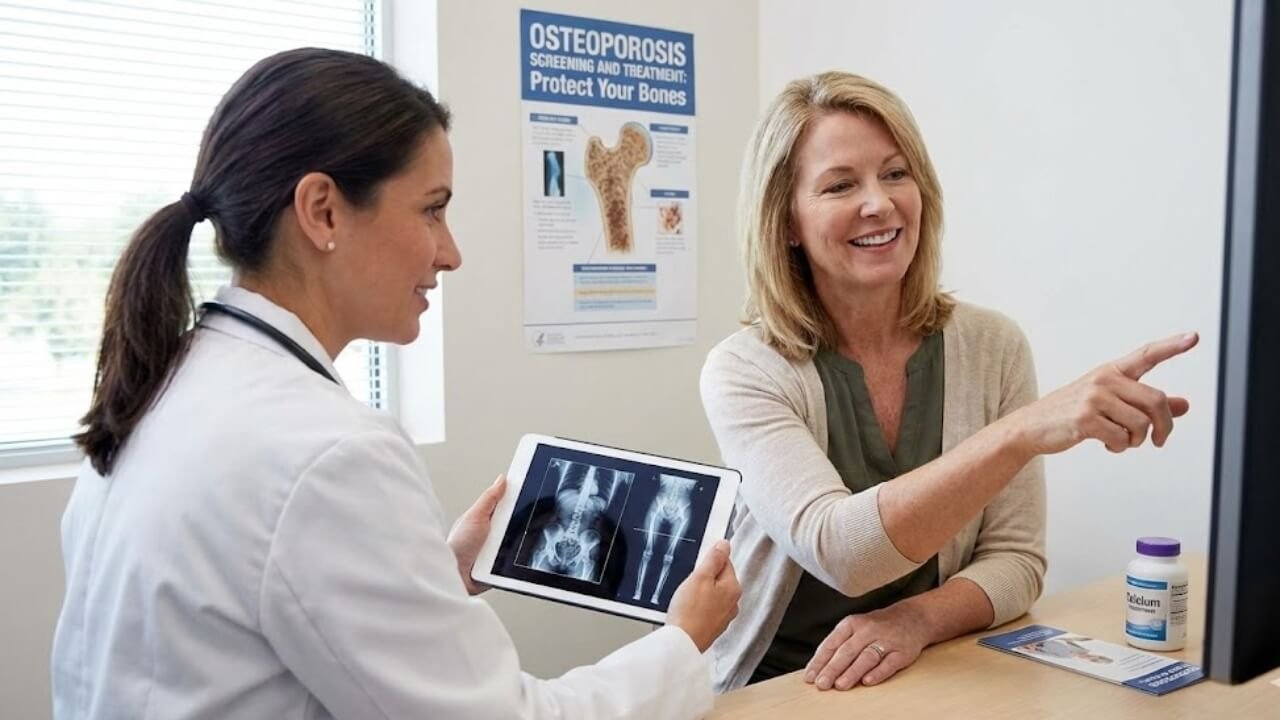
Early Detection and Effective Management
If you have osteoporosis or osteopenia (low bone density), the good news is that highly effective treatments exist. Medications can reduce fracture risk by 30-70%, and combined with lifestyle measures, you can protect your bones and maintain independence. Understanding screening, diagnosis, and treatment options empowers you to make informed decisions with your healthcare provider.
Bone Density Screening (DEXA Scan)
What Is a DEXA Scan?
DXA (Dual-Energy X-ray Absorptiometry):
- Gold standard for measuring bone mineral density
- Uses very low-dose x-rays (much less radiation than chest x-ray)
- Quick, painless, non-invasive
- Measures bone density at hip and spine (most important fracture sites)
- Sometimes forearm if hip/spine can’t be measured
Who Should Be Screened?
Universal Screening:
- All women age 65 and older
Earlier Screening (Postmenopausal Women Under 65) If:
- Fracture after age 50
- Family history of osteoporosis or hip fracture
- Low body weight (under 127 lbs or BMI under 19)
- Smoking
- Excessive alcohol (more than 2 drinks daily)
- Rheumatoid arthritis
- Long-term corticosteroid use
- Early menopause (before 45)
- Other medications or conditions that weaken bones
FRAX Tool: Online calculator (www.sheffield.ac.uk/FRAX) estimates 10-year fracture risk based on risk factors. Helps determine who should be screened before age 65.
What to Expect During DEXA Scan
Preparation:
- No special preparation usually needed
- Wear comfortable clothing without metal (zippers, buttons, snaps)
- Remove jewelry, belt, coins
- No need to fast
- Tell technologist if possibility of pregnancy
The Procedure:
- Lie on padded table
- Remain still while scanner passes over body
- Hip and spine scanned (sometimes forearm)
- Takes 10-20 minutes total
- Completely painless—you feel nothing
After:
- No recovery time needed
- Resume normal activities immediately
- Results usually available within days to weeks
Understanding Your Results
T-Score (Most Important): Compares your bone density to healthy 30-year-old adult (peak bone mass).
- -1.0 or above: Normal bone density—continue prevention measures, rescreen in 5-10 years
- -1.0 to -2.5: Osteopenia (low bone density)—high risk for developing osteoporosis, focus on prevention, consider treatment if other risk factors, rescreen in 2-5 years
- -2.5 or below: Osteoporosis—treatment recommended, rescreen in 1-2 years to monitor treatment
- -2.5 or below plus previous fracture: Severe osteoporosis—treatment essential
Example: T-score of -2.8 at hip means your bone density is 2.8 standard deviations below peak bone mass = osteoporosis.
Multiple Sites Measured:
- Spine (lumbar vertebrae—usually L1-L4)
- Hip (femoral neck and total hip)
- Sometimes forearm
Lowest T-score determines diagnosis. If spine is -1.5 (osteopenia) but hip is -2.6 (osteoporosis), you have osteoporosis.
Z-Score: Compares your bone density to others your same age. Less commonly used for diagnosis.
- If Z-score is -2.0 or below, suggests secondary cause of bone loss (beyond age/menopause)—further evaluation needed
Bone Density (g/cm²): Actual bone mineral density measurement. T-score is calculated from this.
Follow-Up Screening
If Normal:
- Repeat in 5-10 years depending on risk factors
- Sooner if risk factors develop
If Osteopenia:
- Repeat in 2-5 years
- More frequent if close to osteoporosis range or worsening
If Osteoporosis:
- Begin treatment
- Repeat in 1-2 years to ensure treatment working
- After stable, may extend to every 2 years
When Treatment Is Recommended
Osteoporosis Diagnosis (T-score -2.5 or below): Treatment recommended for all.
Osteopenia (T-score -1.0 to -2.5) Plus:
- Previous hip or vertebral fracture
- Fracture after age 50
- High FRAX score (10-year risk of major fracture >20%, or hip fracture >3%)
- Other risk factors (corticosteroid use, early menopause, etc.)
Goal: Prevent fractures—treatment reduces fracture risk significantly.
Medications for Osteoporosis
Bisphosphonates (First-Line Treatment)
How They Work: Slow bone breakdown (resorption), allowing formation to catch up. Bone density increases or stabilizes.
Common Bisphosphonates:
Alendronate (Fosamax):
- Oral, weekly (70mg tablet)
- Generic available (inexpensive)
- Reduces spine fractures 50%, hip fractures 50%
Risedronate (Actonel, Atelvia):
- Oral, weekly or monthly
- Similar effectiveness to alendronate
- Atelvia form has enteric coating (may reduce GI side effects)
Ibandronate (Boniva):
- Oral monthly or IV every 3 months
- Proven for spine fractures; hip fracture data less robust
- Good option if can’t tolerate weekly oral medications
Zoledronic Acid (Reclast):
- IV infusion once yearly (15-30 minutes)
- Very effective (reduces spine fractures 70%, hip fractures 40%)
- Good compliance (once yearly)
- Good option if can’t tolerate oral medications
Effectiveness:
- Reduce spine fractures 40-70%
- Reduce hip fractures 40-50%
- Reduce other non-spine fractures 20-40%
- Very effective for preventing fractures
How Long to Take:
- Typically 3-5 years initially
- After 3-5 years, “drug holiday” may be considered for some patients (bisphosphonates remain in bone even after stopping)
- Decision based on fracture risk—high-risk patients continue longer
- Discuss with provider
Side Effects:
Common:
- GI upset (heartburn, nausea, abdominal pain) with oral forms—usually mild
- Flu-like symptoms after first IV dose (fever, muscle aches)—resolves in 1-3 days, less common with subsequent doses
Rare but Serious:
- Osteonecrosis of jaw (ONJ): Rare (1 in 10,000-100,000)—jaw bone doesn’t heal after dental procedure. Maintain good dental hygiene, complete needed dental work before starting, inform dentist you’re taking bisphosphonate
- Atypical femur fractures: Very rare (1 in 1,000-10,000) with long-term use—unusual fracture pattern. Risk increases after 5+ years. Stop taking if thigh pain develops.
- Esophageal irritation (oral forms)
Balance: Benefits (preventing common, devastating fractures) far outweigh risks (rare complications) for most women with osteoporosis.
How to Take Oral Bisphosphonates:
- Take first thing in morning on empty stomach
- With full glass (6-8 oz) plain water only (not juice, coffee, or other beverages)
- Remain upright (sitting or standing) for 30-60 minutes
- Don’t eat, drink anything else, or lie down for 30-60 minutes
- Then eat breakfast (calcium supplements or food won’t interfere once waiting period over)
Timing is crucial to maximize absorption and minimize GI side effects.
Denosumab (Prolia)
How It Works: Monoclonal antibody that blocks bone breakdown. Different mechanism than bisphosphonates.
Administration:
- Injection under skin (subcutaneous) every 6 months
- Given in doctor’s office
- Very convenient
Effectiveness:
- Reduces spine fractures 68%
- Reduces hip fractures 40%
- Reduces non-spine fractures 20%
- Very effective
Advantages:
- Doesn’t accumulate in bone like bisphosphonates
- Convenient (every 6 months)
- No GI side effects
- Good for patients who can’t take bisphosphonates
Side Effects:
- Increased infection risk (minor—skin infections, UTIs)
- Low calcium levels (ensure adequate calcium/vitamin D)
- Rare: osteonecrosis of jaw, atypical femur fractures (similar to bisphosphonates but less common)
Important:
- Don’t skip or delay doses—bone loss can rebound quickly if missed
- Don’t stop abruptly—rapid bone loss can occur; need transition to another medication if stopping
- Often used long-term (no drug holiday like bisphosphonates)
Hormone Replacement Therapy (HRT/Estrogen)
How It Works: Replaces estrogen lost after menopause, preventing bone loss.
Effectiveness: Reduces fractures 30-40%.
When Considered:
- Women with moderate to severe menopause symptoms plus osteoporosis
- Early menopause (before 45)—should take until age 51
- Younger postmenopausal women
Not First-Line for Osteoporosis Treatment: If only indication is osteoporosis (no menopausal symptoms), other medications preferred due to risks (breast cancer, blood clots—see HRT page).
Bone Protection Ends When Stopped: Bone loss resumes at menopause rate when HRT discontinued.
Selective Estrogen Receptor Modulators (SERMs)
Raloxifene (Evista):
- Acts like estrogen on bones, blocks estrogen in breast/uterus
- Oral, daily
- Effectiveness: Reduces spine fractures 30-50%, but does NOT reduce hip fractures
- Reduces breast cancer risk
- May worsen hot flashes
- Increases blood clot risk (similar to estrogen)
When Considered:
- Younger postmenopausal women with osteoporosis/high spine fracture risk
- Breast cancer risk
- Can’t or won’t take bisphosphonates
- Not appropriate for women with high hip fracture risk (doesn’t reduce hip fractures)
Teriparatide (Forteo) and Abaloparatide (Tymlos)
How They Work: Synthetic parathyroid hormone that stimulates bone formation (only medications that build new bone rather than slowing breakdown).
Administration:
- Daily self-injection under skin
- Used for maximum 2 years in lifetime
Effectiveness:
- Most effective medications for building bone
- Reduce spine fractures 65-90%
- Reduce non-spine fractures 35-50%
When Considered:
- Severe osteoporosis (T-score below -3.5)
- Fracture despite treatment with other medications
- Multiple fractures
- Very high fracture risk
- Corticosteroid-induced osteoporosis
Expensive:
- $3,000-4,000+ monthly
- Often covered by insurance if other treatments failed
- Manufacturer assistance programs available
After Completing Course: Transition to bisphosphonate or denosumab to maintain gains.
Romosozumab (Evenity)
How It Works: Monoclonal antibody that increases bone formation and decreases bone breakdown. Dual mechanism.
Administration:
- Two injections under skin monthly for 12 months
- Given in doctor’s office
Effectiveness:
- Rapidly increases bone density
- Reduces spine fractures 73%
- Reduces non-spine fractures 36%
When Considered:
- Very high fracture risk
- Severe osteoporosis
- Fracture despite other treatment
- Alternative to teriparatide
Caution:
- May increase cardiovascular risk (heart attack, stroke)—not used in patients with recent cardiovascular event
- Expensive
After Completing Course: Transition to bisphosphonate or denosumab.
Choosing the Right Medication
First-Line for Most Women:
- Oral bisphosphonate (alendronate or risedronate)—inexpensive, effective, most studied
- IV bisphosphonate if can’t tolerate oral or prefer yearly infusion
If Can’t Tolerate Bisphosphonates or They Don’t Work:
- Denosumab (Prolia)
If Severe Osteoporosis or Very High Fracture Risk:
- Teriparatide, abaloparatide, or romosozumab (bone-building medications)
Factors Your Provider Considers:
- Fracture risk level
- Which bones most at risk (spine vs hip)
- Previous fractures
- Other medical conditions
- Other medications
- Cost and insurance coverage
- Your preferences (oral daily/weekly, IV yearly, injection every 6 months)
- Side effect concerns
Shared Decision-Making: Discuss options with your provider to choose what’s best for your situation.
Monitoring Treatment
Follow-Up DEXA Scans:
- 1-2 years after starting treatment
- Goal: bone density stable or improving (even small increase is success)
- If bone density declining, may need different medication
Bone Turnover Markers (Blood/Urine Tests):
- Measure bone formation and breakdown
- Can assess treatment response sooner than waiting for repeat DEXA
- Not routinely needed but can be helpful
Calcium and Vitamin D Levels:
- Check vitamin D level (especially if not supplementing adequately)
- Ensure adequate levels while on treatment
Clinical Monitoring:
- Any new fractures (suggests treatment not working)
- Side effects
- Medication adherence
Lifestyle Measures Remain Essential
Medication Alone Not Enough:
- Continue calcium 1200mg daily
- Continue vitamin D 800-1000 IU daily
- Continue weight-bearing and strength training exercise
- Don’t smoke
- Limit alcohol
- Prevent falls
Combination Is Most Effective: Medication plus lifestyle provides maximum fracture protection.
What If You Have a Fracture?
Fragility Fracture: Fracture from minor trauma (fall from standing height or less) indicates severe osteoporosis.
Immediate Actions:
- Seek medical care
- Fracture may need treatment (casting, surgery)
- Pain management
After Fracture Heals:
- If not already on osteoporosis medication, start immediately
- First fracture greatly increases risk of subsequent fractures
- Aggressive treatment essential
- Often switch to more potent medication if fracture occurred despite treatment
Vertebral Compression Fractures:
- Often managed conservatively (pain medication, rest, bracing)
- Vertebroplasty or kyphoplasty (cement injected into vertebra) for severe, persistent pain
- Physical therapy for posture and core strengthening
Hip Fractures:
- Usually require surgery
- Extensive rehabilitation
- Prevention of second fracture critical
Special Situations
Corticosteroid-Induced Osteoporosis:
- Start bisphosphonate or teriparatide when beginning long-term corticosteroids
- Prevention better than waiting for bone loss
- Higher fracture risk than postmenopausal osteoporosis
Men with Osteoporosis:
- Same medications used
- Often secondary cause (low testosterone, medications, chronic conditions)—evaluate and treat underlying cause
Premenopausal Women:
- Osteoporosis uncommon (investigate underlying cause)
- Treatment decisions complex
- Often focus on treating underlying cause rather than osteoporosis medications
The Bottom Line
Screening Saves Bones: DEXA scan at 65 (earlier if risk factors) detects osteoporosis before fractures occur.
Treatment Works: Medications reduce fracture risk by 30-70%—dramatic benefit.
First-Line Treatment: Bisphosphonates (oral or IV) for most women—effective, safe, inexpensive.
More Options Exist: If bisphosphonates don’t work or aren’t tolerated, multiple alternatives available.
Lifestyle Still Matters: Medication plus calcium, vitamin D, exercise, and fall prevention provides best protection.
Don’t Delay: If you have osteoporosis, start treatment. First fracture dramatically increases risk of more fractures. Prevention is key.
Monitoring Ensures Success: Follow-up DEXA scans ensure treatment working; adjust if needed.
Fractures Are Preventable: With screening, treatment, and lifestyle measures, you can protect your bones and maintain independence, mobility, and quality of life.
Take Action:
- Get screened (DEXA scan)
- Know your T-score
- Discuss treatment if indicated
- Take medication as prescribed
- Continue lifestyle measures
- Monitor with follow-up scans
Your Bones, Your Future: The actions you take now protect your mobility and independence for decades to come. You’re worth the effort.