

What Every Woman Over 40 Should Know
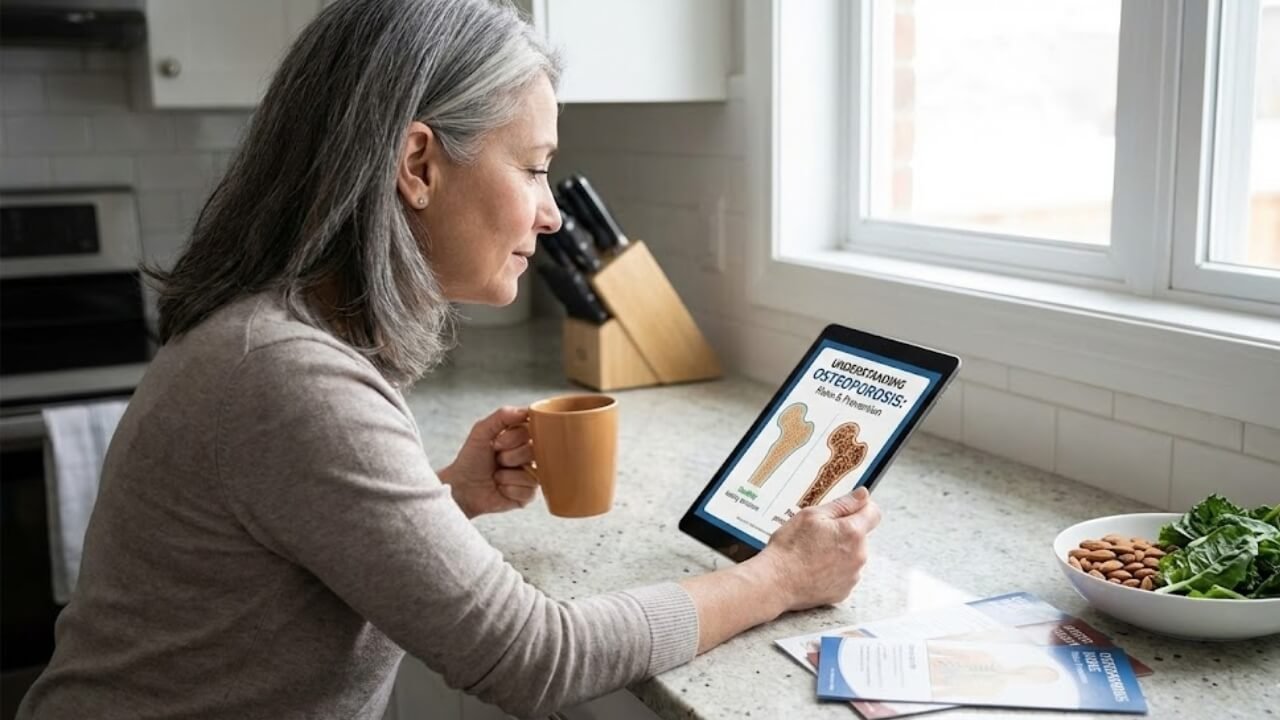
Osteoporosis—literally meaning “porous bones”—is a disease characterized by low bone mass and deterioration of bone tissue, leading to fragile bones that fracture easily. It’s often called a “silent disease” because bone loss occurs without symptoms until a fracture happens. For postmenopausal women, osteoporosis is a major health threat, but understanding and prevention can dramatically reduce your risk.
What Is Osteoporosis?
Normal Bones: Bone is living tissue that constantly breaks down and rebuilds. Throughout life, your body removes old bone (resorption) and forms new bone (formation). During childhood and young adulthood, formation exceeds resorption—bones grow and strengthen. Peak bone mass is reached around age 30.
After Age 30: Resorption gradually exceeds formation. Bone density slowly declines—normal aging process.
After Menopause: Without estrogen’s protective effect, bone resorption dramatically accelerates. Formation doesn’t keep pace. The result: rapid bone loss.
Osteoporosis: When so much bone mass is lost that bones become weak and fracture easily—from minor trauma or even normal activities.
Bone Density Categories
Normal: Bone density within 1 standard deviation of young adult average (T-score above -1.0)
Osteopenia: Low bone density but not yet osteoporosis (T-score between -1.0 and -2.5). Increased fracture risk but not as high as osteoporosis. Consider it a warning sign—take action now to prevent progression.
Osteoporosis: Significantly low bone density (T-score -2.5 or below). High fracture risk. Requires treatment.
Severe/Established Osteoporosis: Osteoporosis plus history of fragility fracture. Very high fracture risk.
How Common Is Osteoporosis?
Statistics:
- Affects 1 in 3 women over age 50 (compared to 1 in 5 men)
- Over 10 million Americans have osteoporosis
- Another 44 million have osteopenia (low bone density)
- 50% of women will break a bone due to osteoporosis in their lifetime
Why Women Are at Higher Risk:
- Smaller, thinner bones to begin with
- Rapid bone loss after menopause (estrogen decline)
- Live longer (more time for bone loss)
- Often don’t get enough calcium/vitamin D
Age Factor:
- Rare before menopause (unless other risk factors)
- Risk increases dramatically after menopause
- By age 80, most women have osteoporosis or osteopenia
Why Postmenopausal Women Are Most at Risk
Estrogen’s Critical Role: Before menopause, estrogen:
- Maintains balance between bone breakdown and rebuilding
- Protects bone density
- Keeps bones strong
After Menopause:
- Estrogen levels drop to 10% of premenopausal levels
- Bone breakdown (resorption) accelerates
- Formation can’t keep pace
- Result: Rapid bone loss—up to 20-30% in first 5-10 years after menopause
The Window: First decade after menopause is critical period for bone loss. Prevention efforts most important during this time.
Other Risk Factors
Risk Factors You Cannot Change
Age:
- Older = greater bone loss
- Risk doubles every 5-10 years after menopause
Gender:
- Women at much higher risk than men
- Smaller, thinner bones plus menopause
Race/Ethnicity:
- White and Asian women highest risk
- Hispanic women moderate risk
- Black women lower risk (higher peak bone mass)
Body Frame:
- Small, thin frame (under 127 lbs or BMI under 19)
- Less bone mass to begin with
Family History:
- Osteoporosis runs in families
- If mother or sister had osteoporosis or hip fracture, your risk increases
Early Menopause:
- Natural menopause before age 45
- Surgical menopause (ovaries removed)
- More years living without estrogen’s protection
Previous Fracture:
- Fracture after age 50 from minor trauma doubles future fracture risk
Risk Factors You CAN Change
Inadequate Calcium:
- Need 1200mg daily after age 50
- Most women don’t get enough
Inadequate Vitamin D:
- Need 800-1000 IU daily
- Deficiency very common
- Without vitamin D, can’t absorb calcium
Sedentary Lifestyle:
- Bones need weight-bearing stress to maintain strength
- Inactivity accelerates bone loss
Smoking:
- Directly toxic to bones
- Reduces estrogen
- Interferes with calcium absorption
- Dramatically increases fracture risk
Excessive Alcohol:
- More than 2 drinks daily
- Interferes with calcium absorption
- Increases fall risk
- Toxic to bone-forming cells
Low Body Weight:
- BMI under 19
- Eating disorders (anorexia)
- Excessive weight loss
Certain Medications (Long-term use):
- Corticosteroids (prednisone)—most significant
- Some anti-seizure medications
- Proton pump inhibitors (PPIs for heartburn—controversial)
- Some cancer treatments
- Thyroid hormone (if over-replaced)
- Lithium
- Depo-Provera (birth control injection)
Medical Conditions:
- Rheumatoid arthritis
- Hyperthyroidism or hyperparathyroidism
- Celiac disease, inflammatory bowel disease
- Chronic kidney or liver disease
- Diabetes (Type 1 especially)
- COPD
- Multiple sclerosis
- Eating disorders
Consequences of Osteoporosis
Fractures Are the Problem: Osteoporosis itself doesn’t hurt or cause symptoms. The devastating consequences come from fractures (broken bones).
Most Common Fracture Sites
Hip Fractures:
- Most serious
- Usually require surgery
- 25% of hip fracture patients die within 1 year (from complications: pneumonia, blood clots, infections)
- 50% never regain full mobility
- 25% require long-term nursing home care
- Profound loss of independence
Spine (Vertebral) Fractures:
- Often occur without significant trauma (lifting, bending, even sneezing)
- May be painless (30-50% go undiagnosed) or cause severe back pain
- Multiple vertebral fractures cause:
- Loss of height (up to several inches)
- Stooped posture (dowager’s hump)
- Chronic pain
- Reduced lung capacity
- Difficulty with daily activities
Wrist Fractures:
- Common from trying to break a fall
- Less serious than hip/spine but still disabling
- May require surgery
- Can cause chronic pain and limited function
Other Sites:
- Ribs
- Pelvis
- Upper arm (humerus)
- Any bone can fracture
Impact on Quality of Life
Beyond immediate fracture consequences:
- Chronic pain
- Disability and loss of independence
- Fear of falling (leads to reduced activity, which worsens bone loss)
- Social isolation
- Depression
- Need for assistive devices or long-term care
- Financial burden
Why Osteoporosis Is “Silent”
No Symptoms: Bone loss occurs gradually over years without any warning signs or symptoms. You can’t feel your bones getting weaker.
First Sign Is Often a Fracture: Many women don’t know they have osteoporosis until they break a bone.
Height Loss: May lose 1-2+ inches of height due to vertebral compression fractures—often attributed to “normal aging” but actually indicates severe osteoporosis.
Stooped Posture: Kyphosis (excessive forward curvature of upper spine) from multiple vertebral fractures.
Why This Matters: Can’t wait for symptoms to get screened. By the time fractures occur, significant bone loss has already happened. Prevention and early detection through screening are essential.
Who Should Be Screened?
Bone Density Testing (DEXA Scan):
All Women:
- Age 65 and older (universal screening)
Earlier Screening (Before 65) If:
- Postmenopausal with risk factors:
- Previous fracture after age 50
- Family history of osteoporosis
- Smoking
- Low body weight (under 127 lbs or BMI under 19)
- Rheumatoid arthritis
- Excessive alcohol
- Taking medications that weaken bones (corticosteroids, etc.)
- Early menopause
FRAX Tool: Online calculator estimating 10-year fracture risk based on risk factors. Helps determine who should be screened before age 65.
If You Have Risk Factors: Discuss screening with your provider. Don’t wait until 65 if you’re high-risk.
Understanding Your DEXA Scan Results
T-Score: Compares your bone density to healthy 30-year-old adult (peak bone mass).
- -1.0 or above: Normal bone density
- -1.0 to -2.5: Osteopenia (low bone density)
- -2.5 or lower: Osteoporosis
- -2.5 or lower plus fracture: Severe osteoporosis
Example: T-score of -2.7 means your bone density is 2.7 standard deviations below peak bone mass = osteoporosis.
Sites Measured:
- Spine (lumbar vertebrae)
- Hip (femoral neck and total hip)
- Forearm (sometimes)
Lowest T-score at any site determines diagnosis.
Z-Score: Compares your bone density to others your same age. Less commonly used for diagnosis but helps identify if bone loss is more than expected for age.
Follow-Up:
- If normal: Repeat in 2-10 years depending on risk factors
- If osteopenia: Repeat in 2-5 years, focus on prevention
- If osteoporosis: Begin treatment, repeat in 1-2 years to monitor
Other Tests
Fracture Risk Assessment: Your provider considers T-score plus other factors (age, previous fractures, medications, other conditions) to determine overall fracture risk and treatment recommendations.
Blood Tests (If Bone Loss Severe or Unexpected):
- Calcium, vitamin D levels
- Parathyroid hormone
- Thyroid function
- Testosterone
- Kidney function
- Celiac disease screening
- Other tests to identify causes of secondary osteoporosis
Bone Turnover Markers: Blood or urine tests measuring bone breakdown or formation. Can help monitor treatment response.
Preventing Osteoporosis
Best Strategy: Prevention Building strong bones when young and preventing bone loss is far better than treating osteoporosis after it develops.
For Postmenopausal Women:
- Focus on slowing bone loss
- Maintain bone density
- Prevent fractures
Key Strategies (See Prevention Page):
- Adequate calcium (1200mg daily)
- Adequate vitamin D (800-1000 IU daily)
- Weight-bearing and muscle-strengthening exercise
- Don’t smoke
- Limit alcohol
- Prevent falls
Treatment If You Have Osteoporosis
See Treatment Page: Detailed information about medications, monitoring, and comprehensive management.
Key Points:
- Multiple effective medications available
- Treatment reduces fracture risk by 30-70%
- Lifestyle measures still essential alongside medication
- Regular monitoring ensures treatment working
The Bottom Line
Osteoporosis Is Common: One in three postmenopausal women will develop osteoporosis. You’re not alone.
Postmenopausal Women Are at Highest Risk: Rapid estrogen decline after menopause causes dramatic bone loss. This is why women are affected far more than men.
It’s Silent Until Fractures Occur: Can’t feel bone loss happening. Screening is the only way to detect it early.
Fractures Are Devastating: Hip fractures especially—25% mortality within one year, 50% never regain mobility. Prevention is critical.
Screening Saves Bones: DEXA scan at 65 (earlier if risk factors) detects osteoporosis before fractures occur.
Prevention Works: Calcium, vitamin D, weight-bearing exercise, not smoking, limiting alcohol, fall prevention dramatically reduce risk.
Treatment Is Effective: If you have osteoporosis, medications reduce fracture risk by 30-70%. Treatment makes a real difference.
Take Action Now: Whether you’re in perimenopause, early postmenopause, or many years post-menopause, it’s never too late to protect your bones. The actions you take today affect your mobility, independence, and quality of life for decades to come.
Don’t Wait for a Fracture: Get screened, assess your risk, take preventive measures. Your future self will thank you.