

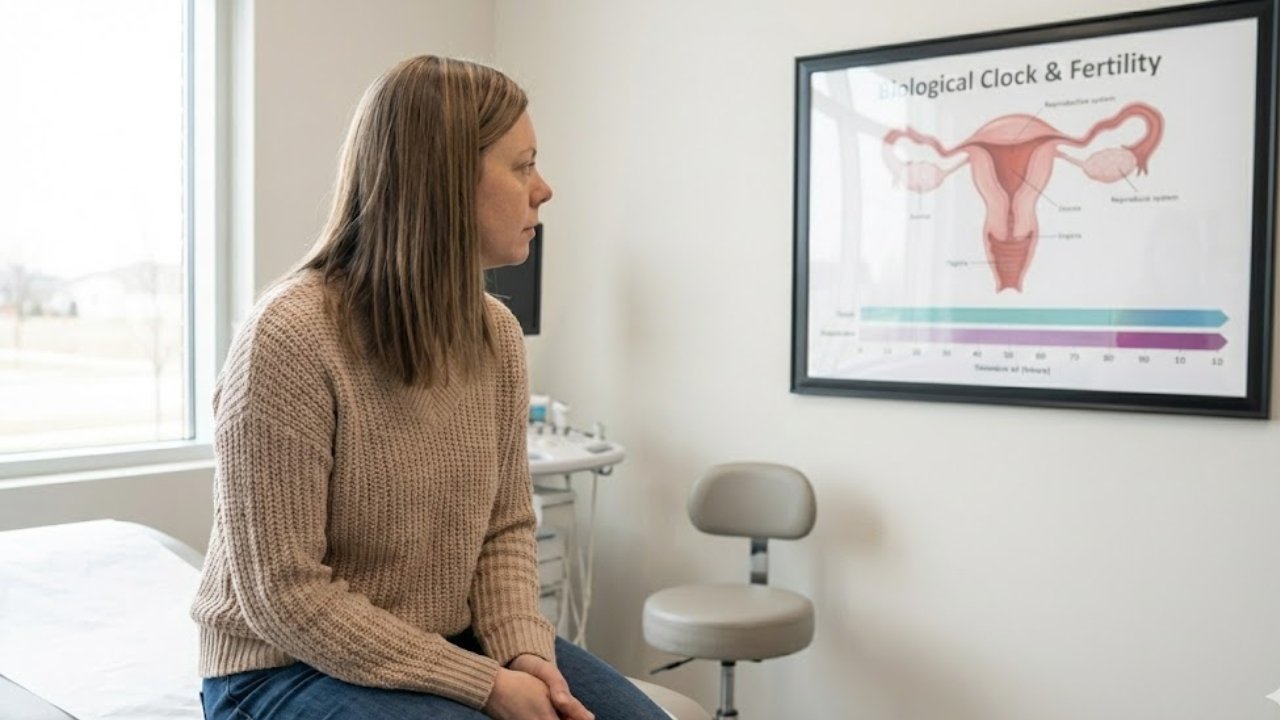
Age is the single most important factor affecting fertility. Understanding how age impacts your fertility helps you plan your timeline.
The Fertility Timeline
Peak Fertility: Ages 20-30
Your most fertile years:
- Highest quality eggs
- Best ovarian reserve
- 25-30% chance of pregnancy per cycle
- Lowest miscarriage risk
- Fewest pregnancy complications
Why these years are optimal:
- Maximum egg quantity and quality
- Healthiest eggs with lowest chromosomal abnormalities
- Strongest hormone levels
- Reproductive system at peak function
Gradual Decline: Ages 30-35
Fertility begins to decrease:
- 15-20% chance per cycle
- Egg quality starts declining
- Egg quantity decreasing
- Still very good fertility overall
- Many women conceive easily
Changes happening:
- Ovarian reserve slowly decreasing
- Egg quality beginning to decline (starts around 25)
- Longer time to conception on average
Steeper Decline: Ages 35-40
More significant changes:
- 10-15% chance per cycle
- Takes longer to conceive
- Higher miscarriage risk
- Increased chromosomal abnormalities
- Lower ovarian reserve
Age 37-38: Particularly significant decline point
Fertility treatment considerations:
- May need help to conceive
- Earlier intervention recommended
- Success rates still reasonable with treatment
Sharp Decline: After Age 40
Dramatic fertility decrease:
- 5-10% chance per cycle naturally
- Significantly reduced egg quality and quantity
- 50% miscarriage risk
- High rate of chromosomal abnormalities
- Most women need fertility treatment
Age 42+:
- Very low natural conception rates
- IVF success rates decline significantly
- Donor eggs become better option (much higher success)
Understanding Ovarian Reserve
You’re born with all the eggs you’ll ever have:
At birth: 1-2 million eggs
At puberty: 300,000-400,000 eggs
Each month: Lose hundreds of eggs (not just the one that ovulates!)
Age 37: Reserve significantly depleted
Age 40: Approximately 25,000 eggs remain
Menopause (average age 51): Fewer than 1,000 eggs
This process cannot be stopped or reversed.
How Egg Quality Declines
Chromosomal Abnormalities Increase
Eggs age as you age:
- DNA damage accumulates
- Cell division errors increase
- Chromosomal abnormalities more common
Risk of Down syndrome by age:
- Age 25: 1 in 1,250
- Age 30: 1 in 1,000
- Age 35: 1 in 400
- Age 40: 1 in 100
- Age 45: 1 in 30
Other chromosomal issues also increase with age.
Miscarriage Risk Increases
Age-related miscarriage rates:
- Age 20-24: 9-10%
- Age 25-29: 10-12%
- Age 30-34: 12-15%
- Age 35-39: 18-25%
- Age 40-44: 34-40%
- Age 45+: 50%+
Most miscarriages due to chromosomal abnormalities in embryo.
The Ovarian Environment
It’s not just about egg quantity:
Deteriorating Environment
As you age, the ovarian environment changes:
- Decreased blood flow to ovaries
- Lower levels of growth factors
- Reduced hormonal support
- Less optimal conditions for egg maturation
Even remaining eggs don’t develop as well.
Decreased Androgen Levels
Androgens (like DHEA) important for:
- Follicle development
- Egg maturation
- Optimal ovarian environment
Levels decrease with age:
- Affects egg quality
- DHEA supplementation may help (discuss with doctor)
Age and Fertility Treatment Success
IUI Success Rates by Age
Per cycle success:
- Under 35: 10-15%
- 35-40: 8-10%
- Over 40: 2-5%
Multiple cycles often needed regardless of age.
IVF Success Rates by Age (Using Own Eggs)
Live birth rate per cycle:
- Under 35: 40-45%
- 35-37: 35-40%
- 38-40: 25-30%
- 41-42: 15-20%
- 43-44: 5-10%
- 45+: 1-3%
These are averages – individual factors matter.
IVF with Donor Eggs
Success rates much higher:
- Depends on donor’s age (usually under 30)
- 50-60% success per cycle
- Age of uterus matters less than age of eggs
- Option for women over 42-43
Male Age and Fertility
Men’s fertility also declines, but more gradually:
After age 40:
- Sperm count may decrease
- Sperm motility decreases
- DNA fragmentation increases
- Longer time to conception
- Increased miscarriage risk
Male age matters, but not as dramatically as female age.
Planning Your Timeline
If You’re in Your 20s
You have time, but be aware:
- Fertility peaks now
- Don’t delay indefinitely
- Lifestyle choices affect future fertility
- Protect your fertility (avoid STIs, maintain healthy weight)
If not ready for children:
- Focus on career, education, personal growth
- Consider fertility preservation (egg freezing) if delaying until late 30s
If You’re in Your Early 30s (30-34)
Good fertility window:
- Still excellent conception chances
- Time to try naturally first
- Track ovulation to optimize timing
- Healthy lifestyle important
If planning to wait:
- Consider timeline (how many children?)
- Fertility testing to check ovarian reserve (optional)
- Egg freezing if delaying several more years
If You’re 35-37
Important decision point:
- Fertility declining but still reasonable
- Don’t delay if you want children
- Seek help after 6 months trying
- Consider fertility testing even before trying
If already trying:
- Optimize timing (track ovulation)
- Get tested after 6 months
- Don’t wait the full year
If You’re 38-40
Time is critical:
- See fertility specialist after 3-6 months trying
- Consider testing before even starting to try
- Likely need treatment assistance
- Success still very possible with treatment
Don’t delay seeking help.
If You’re Over 40
See specialist immediately:
- Don’t wait to start trying
- Fertility testing right away
- May move directly to IVF
- Seriously consider donor eggs (much higher success)
- Every month matters at this age
Age 43+: Donor eggs strongly recommended for best chance of success.
Fertility Preservation Options
Egg Freezing (Oocyte Cryopreservation)
Best before age 35:
- Freeze eggs while they’re younger and better quality
- Use later when ready for children
- “Insurance policy” for future
Process:
- IVF medications to stimulate multiple eggs
- Egg retrieval procedure
- Eggs frozen (vitrification)
- Can remain frozen for years
- Thaw and fertilize when ready
Success depends on:
- Age at freezing (younger = better)
- Number of eggs frozen (more = better)
- 15-20 eggs recommended for good chances
Considerations:
- Expensive ($10,000-15,000 per cycle)
- Storage fees (annual)
- No guarantee of success
- Best for women under 38
Embryo Freezing
If you have a partner:
- Freeze embryos instead of eggs
- Higher success rates than frozen eggs
- Same process but eggs fertilized before freezing
Lifestyle Factors That Affect Fertility at Any Age
Controllable factors:
Maintain healthy weight:
- BMI 18.5-24.9 optimal
- Underweight or overweight reduces fertility
Don’t smoke:
- Accelerates egg loss
- Reduces fertility at any age
- Advances menopause by 1-4 years
Limit alcohol:
- Reduces fertility
- Avoid completely when trying to conceive
Manage stress:
- Chronic stress affects ovulation
- Can delay conception
Regular exercise:
- Moderate exercise improves fertility
- Extreme exercise can disrupt cycles
Avoid environmental toxins:
- Pesticides, chemicals
- BPA in plastics
Realistic Expectations
What Age Means (and Doesn’t Mean)
Age affects:
- Time to conception
- Chance per cycle
- Treatment success rates
- Miscarriage risk
Age doesn’t mean:
- You definitely can’t conceive
- You shouldn’t try
- It’s too late
- You’re a failure
Many women over 35, even over 40, conceive successfully – both naturally and with treatment.
Individual Variation
Every woman is different:
- Some 40-year-olds have good ovarian reserve
- Some 30-year-olds have diminished reserve
- Testing shows your individual situation
- Numbers are averages, not absolutes
AMH testing and antral follicle count show your specific ovarian reserve.
DHEA Therapy for Older Women
Proposed benefits for women over 37-40:
DHEA (Dehydroepiandrosterone):
- Androgen supplement
- May improve ovarian environment
- May decrease chromosomal abnormalities (aneuploidy)
- May improve embryo quality
- May increase pregnancy rates
Evidence:
- Some studies show benefit
- Not all doctors recommend
- Typically 75mg daily for 2-3 months before IVF
Discuss with your fertility specialist – not appropriate for everyone.
The Emotional Reality
Age and fertility can be emotionally painful:
Common feelings:
- Regret (I should have started sooner)
- Anger (No one told me!)
- Grief (Lost time and options)
- Pressure (Running out of time)
- Anxiety (Will it work?)
These feelings are valid.
Remember:
- You made the best decisions with information you had
- You can only move forward from here
- Many options exist
- You’re not alone
Remember
While age affects fertility, it doesn’t define your story. Modern reproductive medicine offers many options.
Knowledge is power. Understanding your fertility timeline helps you make informed decisions.
Whether you’re 25 or 45, your desire for a family is valid and deserves support.
Take action today. Don’t let fear or regret paralyze you. Move forward with the options available to you.
Your age is just one factor in your fertility journey. There’s always a path forward.