

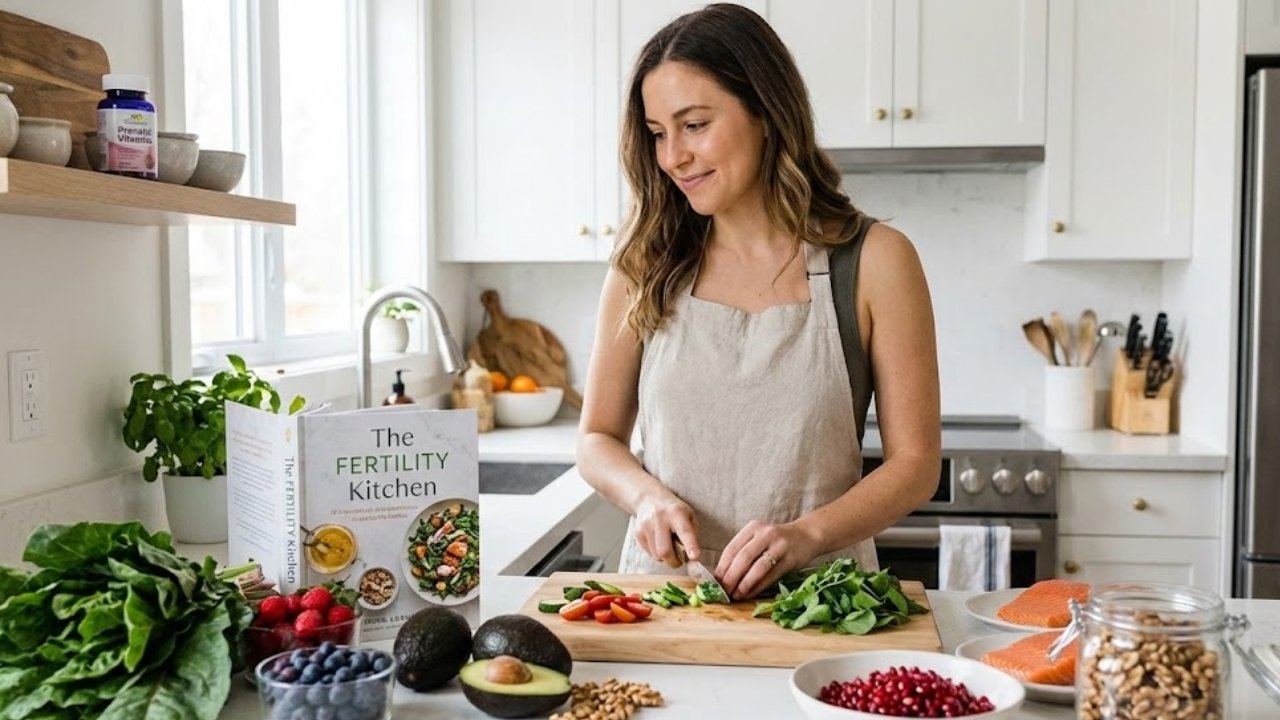
What you eat impacts fertility. Focus on nourishing your body to create the best environment for conception.
Core Principles
Quality Over Perfection
Don’t stress about perfect diet:
- Stress itself harms fertility
- Focus on overall pattern, not perfection
- Consistent healthy choices matter most
- Occasional treats okay
Aim for nutritious most of the time.
Both Partners Matter
Nutrition affects both:
- Female: Egg quality, ovulation, implantation, uterine environment
- Male: Sperm count, motility, morphology, DNA integrity
Eat well together – makes it easier and benefits both.
Essential Nutrients for Fertility
Folate (Folic Acid)
Most critical nutrient:
- Prevents neural tube defects
- Supports egg quality
- Necessary for DNA synthesis
- Needed BEFORE pregnancy (neural tube forms early)
Sources:
- Dark leafy greens (spinach, kale)
- Lentils and beans
- Asparagus
- Broccoli
- Avocado
- Fortified grains
Supplement:
- 400-800 mcg daily MINIMUM
- Start 3 months before trying
- Continue through pregnancy
- In prenatal vitamin
Non-negotiable.
Iron
Important for:
- Ovulation
- Egg quality
- Preventing anemia
- Energy levels
Sources:
- Red meat (lean)
- Dark poultry meat
- Lentils and beans
- Spinach and Swiss chard
- Quinoa
- Fortified cereals
- Pumpkin seeds
Vitamin C increases absorption – pair with citrus, tomatoes, peppers.
Coffee and tea decrease absorption – don’t drink with iron-rich meals.
Get levels checked – supplement if low.
Omega-3 Fatty Acids
Benefits:
- Regulate hormones
- Reduce inflammation
- Support egg quality
- Important for fetal brain development
Sources:
- Fatty fish (salmon, sardines, mackerel)
- Walnuts
- Flaxseeds and chia seeds
- Algae-based supplements (if vegetarian)
Aim for 2-3 servings fish per week or supplement.
Choose low-mercury fish (see foods to limit).
Protein
Essential for:
- Egg and sperm development
- Hormone production
- Overall cell function
Sources:
- Eggs (excellent fertility food)
- Fish and seafood
- Poultry
- Lean meat
- Beans and lentils
- Greek yogurt
- Nuts and seeds
- Tofu
Include protein with each meal.
Complex Carbohydrates
Choose slow-digesting carbs:
- Stabilize blood sugar
- Reduce insulin spikes
- Support regular ovulation (especially important for PCOS)
Good choices:
- Whole grains (oats, quinoa, brown rice, whole wheat)
- Sweet potatoes
- Beans and lentils
- Fruits with skin
Limit:
- White bread, white rice
- Sugary cereals
- Pastries and sweets
- Processed snacks
PCOS especially benefits from low glycemic diet.
Antioxidants
Protect eggs and sperm from damage:
- Vitamin C, Vitamin E, Beta-carotene
- Selenium
- Zinc
Sources:
- Colorful fruits and vegetables
- Berries (blueberries, strawberries)
- Bell peppers
- Tomatoes
- Nuts and seeds
- Dark chocolate (yes!)
“Eat the rainbow” – variety of colors ensures variety of nutrients.
Vitamin D
Important for:
- Hormone regulation
- Egg quality
- Implantation
- PCOS management
- Male fertility
Sources:
- Sunlight (15-20 minutes daily)
- Fatty fish
- Egg yolks
- Fortified milk and orange juice
- Mushrooms
Most people need supplement:
- Get levels checked
- 1000-2000 IU daily typically
- Especially if deficient
Calcium
Supports:
- Egg maturation
- Fertilization process
- Bone health
Sources:
- Dairy (milk, yogurt, cheese)
- Fortified plant milks
- Leafy greens
- Sardines with bones
- Almonds
3 servings daily.
Building a Fertility-Friendly Plate
The Ideal Meal
Half plate: Vegetables
- Mix of colors
- Some raw, some cooked
- Leafy greens often
Quarter plate: Protein
- Lean meat, fish, beans, eggs
- Palm-sized portion
Quarter plate: Complex carbs
- Whole grains or starchy vegetables
- Fist-sized portion
Healthy fat:
- Olive oil, avocado, nuts
- Tablespoon or small handful
Sample Day
Breakfast:
- Greek yogurt with berries, walnuts, and drizzle of honey
- Whole grain toast with avocado and egg
- Green smoothie with spinach, banana, chia seeds, almond milk
Lunch:
- Large salad with grilled chicken, mixed vegetables, olive oil dressing
- Quinoa bowl with roasted vegetables and chickpeas
- Lentil soup with whole grain bread and side salad
Dinner:
- Baked salmon with roasted broccoli and sweet potato
- Stir-fry with tofu, mixed vegetables, brown rice
- Turkey meatballs with whole wheat pasta and tomato sauce
Snacks:
- Apple with almond butter
- Carrot sticks with hummus
- Handful of mixed nuts
- Berries with cottage cheese
Foods That Support Fertility
Fertility Superfoods
Prioritize these:
Eggs:
- Complete protein
- Choline (important for egg quality)
- Vitamin D
- Selenium
Fatty fish (salmon, sardines):
- Omega-3s
- Vitamin D
- Protein
- Low mercury
Leafy greens:
- Folate
- Iron
- Antioxidants
- Fiber
Berries:
- Antioxidants
- Vitamin C
- Low glycemic
Nuts and seeds:
- Healthy fats
- Vitamin E
- Selenium
- Zinc
Beans and lentils:
- Plant protein
- Folate
- Iron
- Fiber
Whole grains:
- B vitamins
- Fiber
- Sustained energy
Avocado:
- Healthy fats
- Folate
- Potassium
Full-fat dairy (moderate amounts):
- Some studies show benefits over low-fat
- Provides calcium and vitamin D
Foods to Limit or Avoid
Alcohol
Recommendation:
- Ideally none while trying to conceive
- Decreases fertility in both men and women
- Especially harmful during two-week wait and early pregnancy
- If drinking, keep to minimum (1-2 drinks per week max)
- Stop completely once pregnant
Why:
- Affects hormone levels
- Reduces egg quality
- Impacts sperm production
- Interferes with implantation
- Fetal alcohol syndrome risk
Hardest to give up for many – but important.
Caffeine
Recommendation:
- Limit to 200mg daily (about one 12oz coffee)
- High intake associated with decreased fertility
- May increase miscarriage risk
Caffeine content:
- 12oz coffee: 200mg
- 8oz coffee: 95mg
- Black tea: 47mg per cup
- Green tea: 28mg per cup
- Cola: 34mg per can
- Energy drinks: 80-150mg (avoid)
- Dark chocolate: 20mg per ounce
Switch to:
- Half-caff coffee
- Decaf
- Herbal tea (most are caffeine-free)
- Water with lemon
High-Mercury Fish
Avoid:
- Shark
- Swordfish
- King mackerel
- Tilefish
- Bigeye tuna
High mercury impairs fertility and harms fetal development.
Choose low-mercury fish instead:
- Salmon, sardines, anchovies
- Trout
- Canned light tuna
- Tilapia, cod, catfish
- Shrimp
Trans Fats
Avoid completely:
- Linked to ovulation problems
- Increase inflammation
- Harm heart health
Found in:
- Fried fast food
- Commercially baked goods
- Margarine with partially hydrogenated oils
- Processed snacks
Read labels – avoid “partially hydrogenated oils.”
Processed and High-Sugar Foods
Limit:
- Spike blood sugar
- Disrupt hormones
- Cause inflammation
- Contribute to weight gain
Reduce:
- Soda and sweet drinks
- Candy and sweets
- White bread, white rice
- Sugary cereals
- Processed snacks
Occasional treat okay – just not daily habit.
Excess Soy (Controversial)
Moderate amounts likely fine:
- Traditional soy foods (tofu, tempeh, edamame)
- Part of balanced diet
Avoid megadoses:
- Soy protein powders
- Soy isoflavone supplements
- Excessive amounts
Phytoestrogens in soy may affect hormones in very high amounts.
Hydration
Water Is Essential
Drink 8-10 glasses daily:
- Supports all bodily functions
- Improves cervical mucus quality
- Helps medication side effects (especially bloating)
- Prevents constipation (progesterone side effect)
- Maintains blood volume
More if:
- Exercising
- Hot weather
- During IVF stimulation (helps prevent OHSS)
Signs of good hydration:
- Pale yellow urine
- Not feeling thirsty
- Moist lips
Limit Sugary Drinks
Avoid:
- Soda
- Fruit juice (high sugar)
- Sweet tea
- Energy drinks
- Sports drinks (unless exercising intensely)
These spike blood sugar without nutrition.
Supplements
Prenatal Vitamin
Non-negotiable:
- Start 3 months before trying
- Continue through pregnancy
- Covers nutritional gaps
Should contain:
- Folic acid (400-800 mcg)
- Iron (27mg)
- Calcium
- Vitamin D
- Iodine
- B vitamins
Take daily – preferably with food.
Additional Supplements to Consider
Discuss with doctor before starting:
Omega-3/Fish Oil:
- If not eating fish regularly
- 1000mg daily
- Choose prenatal-safe brand
Vitamin D:
- If levels low (get tested)
- 1000-2000 IU daily
CoQ10 (Coenzyme Q10):
- May improve egg quality
- Especially for age 35+
- 100-600mg daily
- Takes 3 months to affect eggs
DHEA:
- For low ovarian reserve
- May improve egg quantity and quality
- 75mg daily
- Only under doctor supervision
Inositol:
- For PCOS
- Improves insulin sensitivity
- May improve egg quality
- Specific formulations recommended
For men – improve sperm:
- Vitamin C and E (antioxidants)
- Zinc
- Selenium
- CoQ10
- L-carnitine
Don’t mega-dose without guidance – more isn’t always better.
Weight and Fertility
Healthy Weight Range Matters
Both underweight and overweight affect fertility:
Underweight (BMI under 18.5):
- May not ovulate regularly
- Hormonal imbalances
- Nutrient deficiencies
- Increased miscarriage risk
Overweight/Obese (BMI over 25/30):
- Irregular ovulation
- PCOS more common
- Decreased IVF success rates
- Pregnancy complications more likely
- Male fertility also affected
Healthy weight (BMI 18.5-24.9):
- Regular ovulation
- Better hormone balance
- Improved fertility treatment success
- Healthier pregnancy
Gentle Weight Management
If weight loss recommended:
- Gradual loss (1-2 pounds per week)
- Focus on nutrition quality, not restriction
- Include exercise
- No crash diets
- 5-10% weight loss can improve fertility significantly
If weight gain needed:
- Nutrient-dense foods
- Regular meals and snacks
- Healthy fats
- Work with dietitian if struggling
Focus on health, not perfection.
Special Considerations
PCOS Diet
Low glycemic important:
- Stabilizes insulin
- Improves ovulation
- Helps with weight
Focus on:
- Complex carbs, not simple sugars
- Lean protein each meal
- Anti-inflammatory foods
- Fiber
Supplements:
- Inositol (specific for PCOS)
- Vitamin D
- Omega-3s
Vegetarian/Vegan
Possible to support fertility:
- Ensure adequate protein (beans, lentils, tofu, quinoa)
- Iron from plant sources (with vitamin C)
- B12 supplement (critical)
- Omega-3 from algae or flax
- Calcium from fortified foods or supplements
- Monitor vitamin D
May need more attention to nutrients – work with dietitian.
Practical Tips
Meal Planning
Makes healthy eating easier:
- Plan weekly meals
- Grocery shop with list
- Prep vegetables on weekend
- Cook in batches (freeze extras)
- Keep easy healthy options on hand
Eating Out
Can still be fertility-friendly:
- Choose grilled over fried
- Vegetables as sides
- Ask for dressings/sauces on side
- Skip soda, choose water
- Don’t stress about occasional indulgence
When You’re Exhausted
Fertility treatment is draining:
- Keep it simple
- Prepared healthy foods okay
- Frozen vegetables count
- Rotisserie chicken is fine
- Do your best
Something nutritious is better than nothing.
Remember
Nutrition is ONE factor – not everything.
Don’t let food stress add to fertility stress.
Consistent healthy choices matter more than perfection.
Start where you are. Small changes add up.
Both partners eating well is better than just one.
You’re nourishing your future baby.